


Why Peptides Matter
In conversations about nutrition, we often hear about proteins and amino acids. Proteins are the large, complex molecules that form structure and drive reactions. Amino acids are the elemental units that make them up. Between these two sits another class: Peptides.
Peptides are short chains of amino acids. For a long time, they were thought of simply as halfway fragments — stepping stones between protein and amino acid. Yet research has revealed that some of these small sequences are more than fragments: they are bioactive messengers, carrying information that can influence how cells grow, repair, and defend themselves [Hartmann & Meisel, 2007; Korhonen, 2006].
This signalling role makes peptides relevant to healthy ageing. Collagen-derived fragments can influence skin structure. Dairy-derived peptides can affect blood pressure. The tripeptide glutathione plays a central role in antioxidant defence. Peptides are not just broken pieces of protein — they are part of the body’s communication system.
Identifying bioactive peptides is a key area of research, as it allows scientists to link specific peptide sequences to health benefits and develop targeted therapies.

What Are Bioactive Peptides and Amino Acids?
Bioactive peptides are defined as short amino-acid sequences (generally 2–20 amino acids) that exert specific physiological effects beyond basic nutrition [Hartmann & Meisel, 2007]. Their uniqueness lies not in their size but in their activity: the ability to interact with receptors, enzymes, and genes.
They can arise from several sources:
- Endogenous peptides, synthesised within the body (e.g., glutathione). Glutathione is produced in every cell, specifically to neutralize free radicals, detoxify harmful compounds in the liver, and regenerate other antioxidants like Vitamins C and E
- Dietary peptides, released during digestion of proteins or supplied directly in foods that have been hydrolysed or fermented.
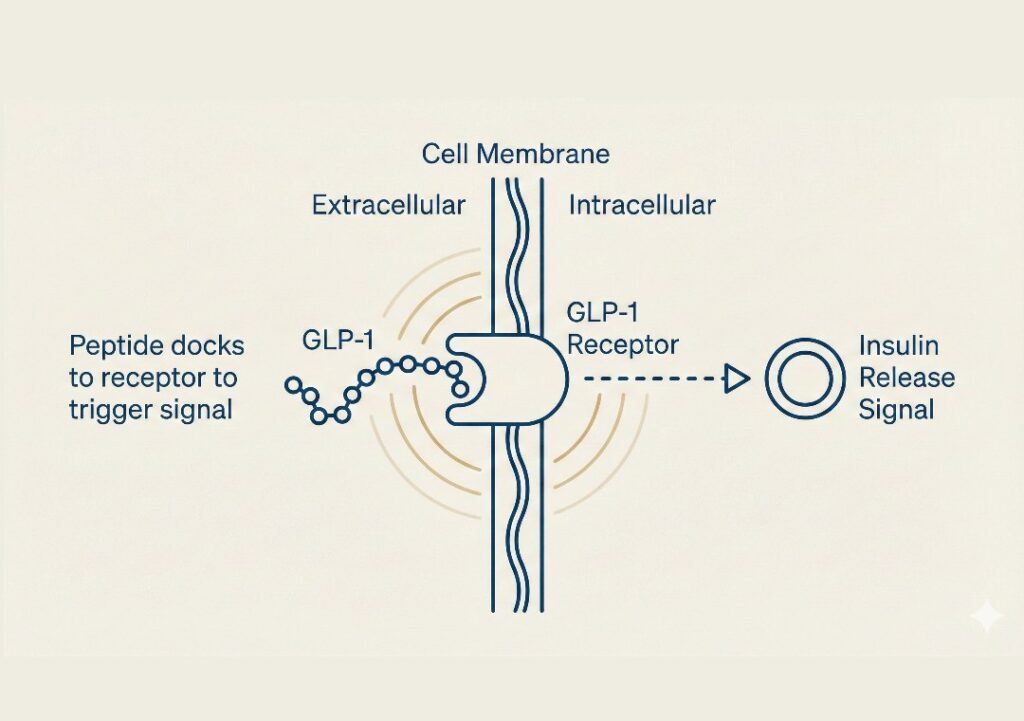
- Peptide hormones are another important class, regulating physiological processes, such as growth, metabolism, and reproduction. (e.g GLP-1).
Across these categories, their common feature is that they convey instructions. Unlike amino acids, which mainly serve as raw materials, or proteins, which perform structural or enzymatic roles, peptides can act as signals that regulate function.
Some bioactive peptides can also influence gene expression, further expanding their range of biological effects.
In this article, we focus specifically on the nutritional class of bioactive peptides—fragments of dietary proteins that survive digestion to act as messengers for skin, muscle, cardiovascular, and metabolic health—and how research is helping to shape the role of functional foods in therapeutic applications. You can read more endogenous peptides like Glutathione, the Master Antioxidant, in (What Are Antioxidants?) and (Liposomal Glutathione: Beyond the Label).
Digestion, Absorption, and Survival
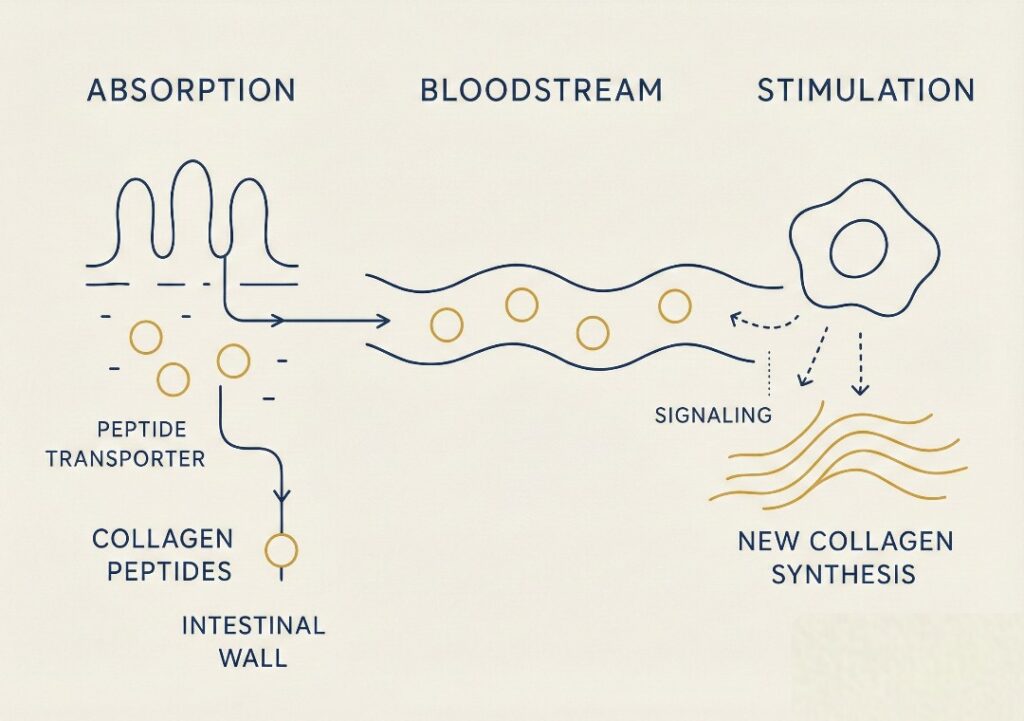
When dietary proteins are digested, the end results are amino acids and short fragments — dipeptides and tripeptides. These are the forms small enough to cross the intestinal lining, while longer peptides are typically broken down further before absorption [Daniel, 2004].
Absorption follows two routes:
- Amino acids use dedicated amino acid transporters.
- Dipeptides and tripeptides are absorbed by a specialised transporter called PEPT1, located on the brush border of the small intestine. PEPT1 accepts nearly all di- and tripeptides, moving them intact into the cells lining the gut [Daniel, 2004].
Inside these cells, many peptides are further hydrolysed (broken down by enzymes) into amino acids before entering the bloodstream. However, some sequences — depending on their stability and structure — remain intact and circulate through the body. These are the bioactive peptides.
This is the key distinction: digestion always produces amino acids and small peptides, but only certain peptides survive intact long enough to act as signals. The amino acid content of the resulting peptides influences their absorption and potential bioactivity, which we will explain in depth below.
Collagen Peptides: Skin, Joints, and Antioxidant Defence
Collagen hydrolysates are a rich source of di- and tripeptides, particularly Pro-Hyp and Hyp-Gly. Collagen hydrolysate is a form of collagen that has been enzymatically broken down into smaller peptides, which are more easily absorbed by the body. These fragments have been detected intact in human plasma after ingestion[Sato et al., 2007]. Unlike free amino acids, Pro-Hyp acts as a signal peptide, stimulating fibroblasts to produce extracellular matrix proteins, thereby supporting skin renewal [Asai et al. 2024]. Collagen hydrolysate supplementation has been shown to stimulate collagen synthesis, especially when combined with vitamin C.
Taking collagen peptide supplements can improve skin moisture and benefit overall skin health. Hydrolysed collagen supplements support collagen production, which over time reduces signs of skin ageing and promotes resilient, healthy skin [Asserin, 2015]. IIt is worth noting, however, that the majority of studies measuring the impact of collagen on the skin are predominantly manufacturer-funded; you can read more about the implications of this in our article,(5 Reasons Collagen Sceptics Are Right About Collagen Placebo). PA more informative approach is to consider the underlying mechanism of collagen peptides and how they interact with your own biological blueprint and internal repair systems. For a deeper dive into this data, see our article, (Do Collagen Supplements Really Work? A Transparent Look at the Evidence).
Collagen peptides may also exert antioxidant effects. Specific sequences, such as Gly-Pro-Hyp, have shown reactive oxygen species (ROS)-scavenging activity in vitro, and human studies report reduced UV-induced skin damage after collagen peptide supplementation [Hue et al., 2018]. While the antioxidant role is still secondary to their structural effects, it illustrates the multifunctional nature of collagen-derived peptides.
You can read more about Bioactive Peptides in Hydrolysed Collagen Supplements in our dedicated article.
Milk-Derived Peptides: Cardiovascular Regulation
During fermentation of casein, Val-Pro-Pro (VPP) and Ile-Pro-Pro (IPP) are released. These tripeptides inhibit angiotensin-converting enzyme (ACE), the enzyme that narrows blood vessels and raises blood pressure when overactive. By reducing ACE activity, these peptides promote vascular relaxation.
Clinical studies in humans demonstrate modest but significant blood pressure reductions after consuming VPP- and IPP-rich fermented milk products [FitzGerald, 2004]This makes milk-derived peptides a clear example of how dietary protein fragments can act as regulators of cardiovascular physiology.
Whey- and Soy-Derived Peptides: Muscle Metabolism Support
While amino acids like leucine are the primary triggers of muscle protein synthesis (MPS), peptide forms of proteins may have added benefits. Whey protein hydrolysates, rich in di- and tripeptides, are absorbed more rapidly than intact whey, leading to faster amino acid delivery and stronger stimulation of MPS in humans [Pennings et al., 2011].
Soy-derived peptides also show promise. Certain soy protein hydrolysates reduced oxidative stress markers and improved recovery in human exercise trials [Lu et al., 2008]. This suggests that plant-derived peptides may complement animal sources in supporting muscle metabolism during aging.
Consuming hydrolysed or fermented protein is a safe and effective way to obtain these bioactive peptides, supporting muscle growth and recovery. Together, whey- and soy-derived peptides illustrate how bioactive fragments can support muscle resilience, particularly in the context of sarcopenia prevention and recovery from exercise.
Spirulina-Derived Peptides: Lipid Metabolism and Weight Markers
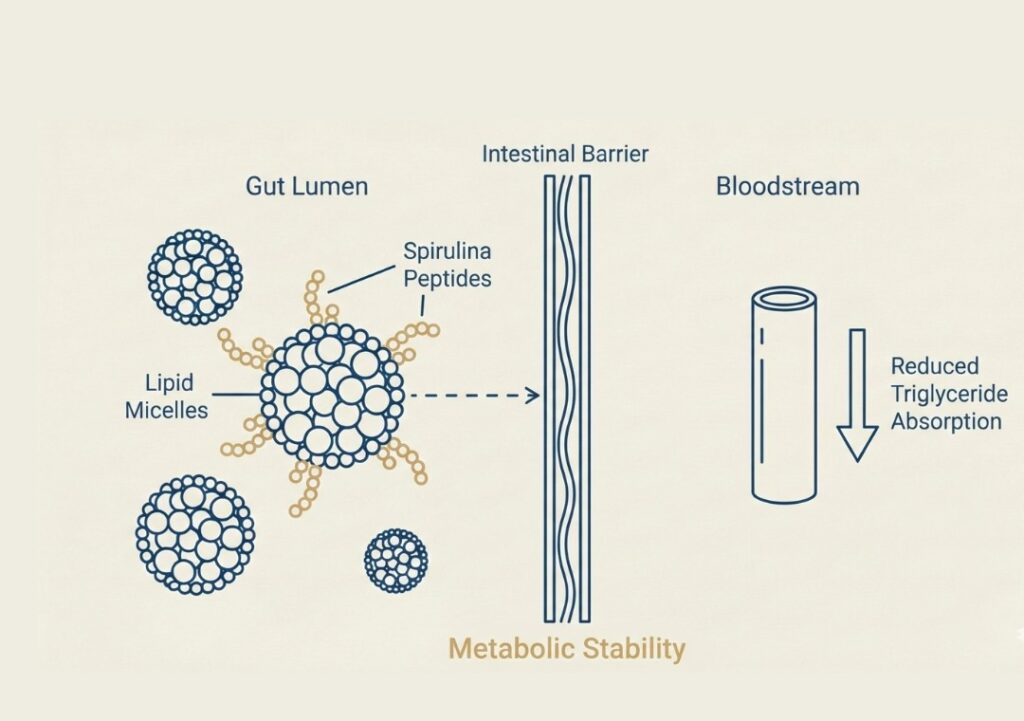
Spirulina (Arthrospira) is an algal protein source increasingly studied for metabolic health. Human trials show that Spirulina supplementation reduces total cholesterol, triglycerides, body fat, and BMI in overweight adults [DiNicolantonio et al., 2020]. A meta-analysis of randomised controlled trials confirmed improvements in obesity-related lipid parameters across multiple studies [Bohórquez-Medina et al., 2021].
These benefits are primarily attributed to protein- and phycocyanin-rich extracts. While purified Spirulina peptide fractions have demonstrated antioxidant activity in vitro, direct human evidence for named peptide sequences is still emerging. Spirulina also contains other bioactive compounds, such as carotenoids and polyphenols, which may contribute to its health effects.
Thus, Spirulina represents a promising frontier: algal peptides may contribute to metabolic regulation, with the strongest current evidence for lipid metabolism. Advances in food chemistry have enabled the identification and optimisation of Spirulina-derived peptides for metabolic health applications.
Safety, Supplementation, and Evidence Limitations
Safety Profile
Bioactive peptides derived from food proteins are generally regarded as safe. Collagen peptides, milk-derived tripeptides, whey and soy hydrolysates, and Spirulina extracts have all been tested in human trials without significant adverse effects. Reported side effects are minimal and usually limited to mild gastrointestinal discomfort at high doses.
Because these peptides are naturally present in the diet or in commonly consumed supplements, their safety record is stronger than that of synthetic or pharmaceutical peptides.
However, quality control remains important: purity, absence of contaminants (heavy metals, microbial load), and accurate labelling are not always guaranteed across commercial products.
Peptide Supplementation Considerations
The dose required for measurable effects varies:
- Collagen peptides: Typically studied at 2.5–10 g/day for skin and joint benefits. Collagen supplementation, particularly in the form of collagen hydrolysate, is designed to provide easily absorbed peptides that support joint and skin health.
- Milk tripeptides (VPP, IPP): Usually effective at 3–15 mg/day of peptide equivalents via fermented dairy drinks.
- Whey hydrolysates: Post-exercise doses of 20–30 g protein, providing high di-/tripeptide content, show anabolic effects.
- Soy peptides: 5–20 g/day of hydrolysed soy protein used in recovery and antioxidant studies.
- Spirulina: 1–8 g/day of dried biomass associated with lipid and weight improvements.
Supplementation form matters. Hydrolysed products (collagen, whey, soy) deliver ready-made peptide fragments. Taking hydrolysed supplements may help the body absorb peptides more efficiently, leading to improved outcomes. Fermented foods (yoghurt, kefir) release tripeptides during processing. Algal extracts provide concentrated protein sources that may yield active fragments upon digestion.
The Future Direction
The strength of bioactive peptide research lies in its mechanistic plausibility and human evidence for select cases (collagen peptides for skin/joints, milk tripeptides for blood pressure, Spirulina for lipids). The frontier is in precision mapping: linking specific sequences to specific receptors or pathways, much as has been achieved for VPP/IPP and ACE inhibition.
For healthy aging, the trajectory is clear: peptides are not just fragments of food but molecular messengers that can be harnessed to sustain structure, regulate physiology, and buffer stress. But the field must move from broad hydrolysate claims toward sequence-defined interventions backed by large, diverse clinical trials.
Peptides as Subtle Architects of Resilience
Aging is not dictated by genes alone, nor by diet in isolation. While our cells are steered by genetic programs and supplied by nutrients, there is a third layer of influence: the molecular signals that fine-tune repair, renewal, and resilience. Among these signals are bioactive peptides — fragments of dietary proteins that survive digestion and act as messengers. From collagen peptides that stimulate fibroblasts, to milk-derived tripeptides that relax blood vessels, to Spirulina peptides that improve lipid balance, these sequences illustrate how food can speak directly to physiology.
Much remains to be mapped at the sequence level, but the principle is clear: bioactive peptides are not inert fragments of food, but nutritional signals that help sustain structure and function as we age.