
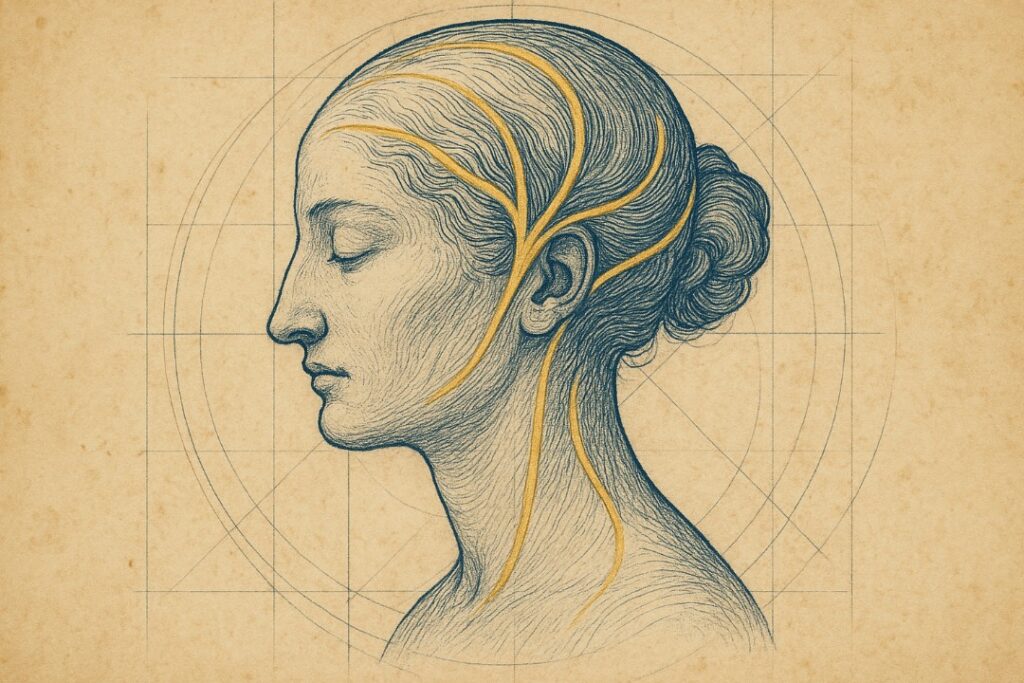

What if we’ve been thinking about aging the wrong way? Too often, aging is perceived as a disease, a slow march toward frailty, or a condition to be fought against. For women especially, that perception carries an extra weight — the societal expectation that youthfulness equals value. But science defines aging differently. It isn’t just the years on your passport, and it isn’t simply decline.
Biologists describe aging as a gradual loss of the body’s ability to maintain balance: a lifelong negotiation between the damage our cells accumulate and the repair systems designed to keep us whole.
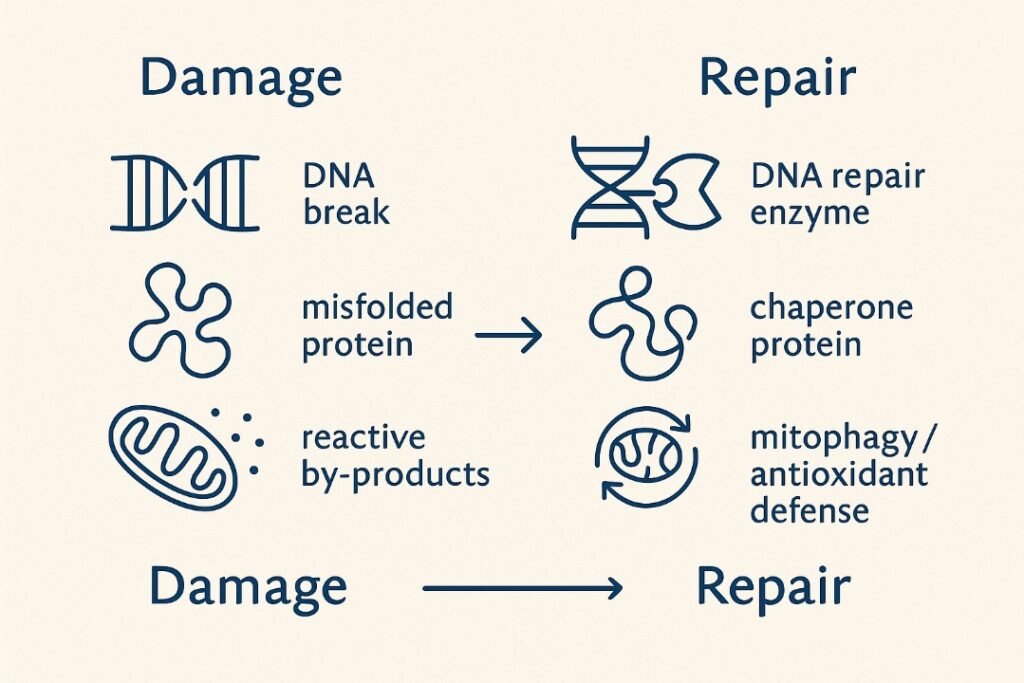
From the very beginning, both forces are at play. Every breath and every cell division produce small forms of damage: DNA breaks, proteins folding the wrong way, mitochondria leaking reactive by-products. At the same time, intricate repair systems work tirelessly: DNA repair enzymes patch breaks, antioxidants neutralize free radicals, autophagy clears debris. In youth, repair outpaces damage — the result is growth, resilience, and vitality. Over time, those repair systems lose efficiency, and damage slowly gains the upper hand. The visible signs of aging appear only once that balance tips.
This perspective changes everything. Aging isn’t an on–off switch, nor is it an enemy to be eradicated. It is a natural process, fundamental to life itself. The real question isn’t whether we can “stop” aging — because we can’t — but whether we can nurture it. Can we extend the years in which repair remains dominant? Can we delay the tipping point where damage outweighs resilience? The science suggests yes — and that is the more hopeful, empowering path.
How Coordinated Are Your Core Biological Systems?
Take the Nurture Assessment to evaluate systemic load across gut, redox, collagen and energy pathways.
What Aging Really Is (Beyond the Myth)
Scientists describe aging as a gradual erosion of the body’s integrity, leading to impaired function and greater vulnerability to death. At the cellular level, this decline begins with the smallest of disruptions: a DNA break that isn’t perfectly repaired, a misfolded protein that slips through, a mitochondrion producing more oxidative stress than energy.
In youth, repair systems manage these problems almost as quickly as they arise. DNA repair enzymes stitch breaks, chaperone proteins refold mistakes, autophagy recycles worn-out parts. Over time, those same systems falter. The errors accumulate, and resilience erodes.
This is the biology beneath the surface of aging: not simply the passage of years, but the gradual erosion of the body’s ability to maintain order in the face of constant stress. And because these processes are influenced by lifestyle, environment, and targeted interventions, they remain open to our influence.
Healthspan vs Longevity: A Better Compass
The promise of “anti-aging” usually takes one of two forms: the fantasy of a single miracle cure, or the confusion of endless products claiming to provide it. Both miss the truth. Biology doesn’t work in absolutes. Every system in the body is interconnected, and pushing one lever too far often creates new vulnerabilities.
Scientists call this the antagonistic pleiotropy principle — the principle that a pathway beneficial in one context can be harmful in another. Suppress growth signals through mTOR and you may extend lifespan in animals, but you also weaken immunity and slow repair. Activate telomerase to preserve chromosomes, and you heighten the risk of uncontrolled cell growth. Even caloric restriction, one of the most consistent interventions in laboratory models, can compromise fertility and resilience if applied without balance.
This doesn’t mean the pursuit of longevity is an illusion. The more accurate aim is healthspan—the years lived in good health, with independence, and resilience. There are no shortcuts to healthspan. True progress comes from integration—reducing avoidable damage, strengthening repair, and balancing interventions so they reinforce rather than destabilize the body. Longevity isn’t a single switch to hack; it’s the outcome of working with biology’s complexity to sustain resilience over time. You can read more about Health Beyond Optimisation on our Substack.
Nurture Aging: A Philosophy for Thriving
If “anti-aging” is the myth, then nurturing aging is the alternative. The aim is not to deny the passage of life, but to shape how it unfolds — to keep repair strong, delay the tipping point where damage outweighs resilience, and extend the years of vitality.
Nurture Aging means working with biology, not against it. It begins by reducing avoidable damage: protecting skin from UV, keeping blood sugar stable, limiting chronic inflammation. It continues by strengthening repair systems: prioritizing sleep, supporting mitochondrial function, encouraging autophagy through movement and fasting windows, and supplying the nutrients and cofactors the body needs to sustain balance. And it extends into maintaining system integrity: loading bones and muscles through resistance work, stimulating neuroplasticity through learning and connection, and supporting immune resilience with recovery and nourishment.
This isn’t about chasing miracle pills or rejecting science. It’s about integrating the best evidence we have into a coherent philosophy: one that respects complexity, balances interventions, and empowers us to live fully.
Final Thought
We cannot stop biology, but we can choose to thrive within it. That is the real path forward: not denying aging, but nurturing it — living with vitality, presence, and resilience at every stage of life.