


In recent years, hydrolysed collagen supplements have gained widespread popularity among those seeking to support skin health, joint function, and overall well-being. Hydrolyzed collagen is a processed form of collagen that is broken down into smaller peptides, making it easier for the body to absorb. Many people turn to these supplements for their potential health benefits, such as improved skin, joint, and bone health.
But how exactly does hydrolysed collagen benefit the body, and where does the science stand?
This article offers a snapshot of some of the potential benefits of adding hydrolysed collagen to your routine. To explore the mechanisms, limitations, and detailed evidence, see our pillar guide: Do Collagen Supplements Really Work? A Transparent Look at the Evidence.
Understanding Collagen and Its Importance
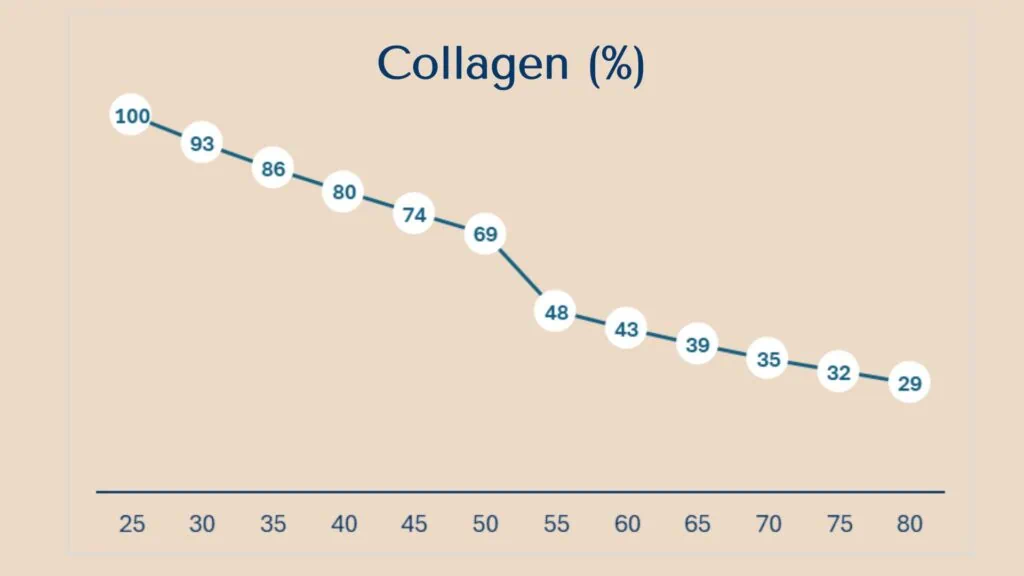
Collagen is the most abundant protein in the human body, forming the structural foundation of skin, bones, cartilage, tendons, and ligaments. The body makes collagen by assembling amino acids obtained from food sources. Vitamin C is essential for collagen synthesis and should be included in the diet to support this process. Maintaining a healthy diet and a balanced diet, rich in a variety of nutrient-dense foods, is important for supporting collagen production and overall health. With age, collagen production naturally declines, resulting in lower collagen levels in the body, which contributes to wrinkles, joint discomfort, and reduced skin firmness. Hydrolysed collagen supplements provide peptides and amino acids that can support the body’s natural maintenance processes [Proksch 2014].
The Role of Collagen in the Body
Collagen’s structural and supportive roles are essential throughout the body, acting as a scaffold for tissues and promoting skin elasticity, joint mobility, and bone strength. Collagen is also found in blood vessels and other connective tissues, where it provides structural integrity and support. Collagen molecules are composed of amino acids arranged in a triple helix structure, forming collagen fibrils that give strength and stability to tissues.
What is Hydrolysed Collagen?
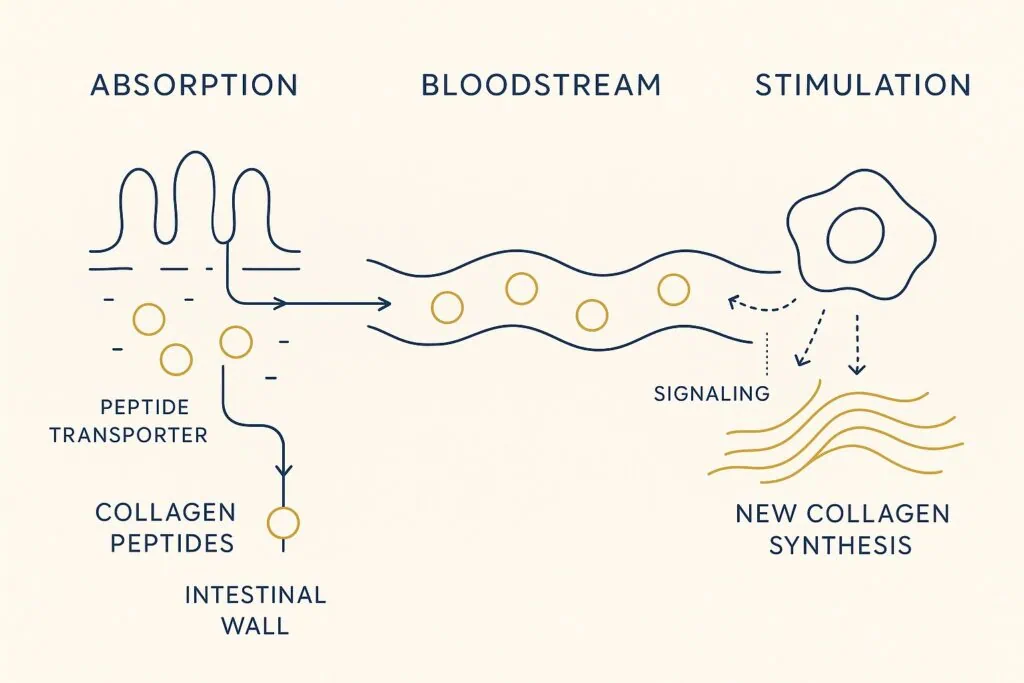
Hydrolysed collagen (bovine or marine), also called collagen peptides or hydrolyzed collagen, is created through enzymatic hydrolysis, breaking large collagen molecules into smaller peptide chains. Hydrolyzed collagen is often available in powder form, which can be easily mixed into foods and drinks without forming gels. These short chains — particularly di- and tri-peptides such as Pro-Hyp — can be absorbed intact and detected in the bloodstream [Iwai et al., 2005].
Oral collagen supplements, including collagen hydrolysate, are commonly used as dietary supplements for their potential health benefits related to skin, joint, and overall connective tissue support. Clinical studies frequently use collagen hydrolysate to assess the effects of supplementation on joint health and osteoarthritis.
Once absorbed, collagen peptides may act as both:
- Building blocks for collagen synthesis
- Signalling molecules that stimulate fibroblasts to produce collagen, elastin, and hyaluronic acid [Zague 2008]
Collagen for Skin Health
Collagen is central to skin hydration, firmness, and elasticity. Clinical trials and meta-analyses consistently show that collagen peptide supplementation:
- Improves hydration Collagen peptides encourage the skin’s cells to make more hyaluronic acid — the natural molecule that holds water. [Inoue et al., 2016]
- Enhances elasticity Collagen also prompts fibroblasts — the skin’s “architect cells” — to produce more collagen and elastin. This helps restore firmness and flexibility, counteracting the loss of bounce that accelerates after menopause and helping to maintain skin elasticity, especially in aging skin. Collagen supplementation may also play a role in reducing wrinkles and supporting healthy skin.
A 2021 meta-analysis found moderate but meaningful improvements in hydration, elasticity, and wrinkle depth in those taking collagen versus placebo. These effects contribute to healthy skin and may help slow the visible signs of skin aging.
Collagen and Gut Health – Supporting Digestive Integrity
Collagen contains L-glutamine, an amino acid that’s a primary energy source for enterocytes — the cells that line your intestine. This role is well established: by fuelling these cells, glutamine helps maintain the integrity of the gut wall [Kim & Kim, 2017]
In addition, collagen peptides (the short chains produced when collagen is hydrolysed) are being studied for possible gut benefits. Early research suggests they might:
- Help strengthen the intestinal barrier by supporting tight junction proteins — the “seals” that stop unwanted particles from leaking through [Chen et al.2017).
- Act like prebiotics, modestly influencing gut microbiota composition in animal and small human studies [Baek et al, 2023).
But this research is still early-stage — the mechanisms look promising, but large, long-term human trials are lacking.
Supports Joint & Bone Health
Joints
Collagen is the main structural protein in cartilage. Meta-analyses of randomized controlled trials suggest collagen supplementation may reduce pain and improve joint symptoms in osteoarthritis, particularly of the knee [García-Coronado et al., 2019]. Some clinical trials have also demonstrated significant pain relief when comparing collagen peptides to placebo in knee OA patients. [Lin et al., 2023]
A meta-analysis is a powerful type of research that statistically combines the results from multiple independent studies on the same topic, providing a stronger overall conclusion than any single study alone.
In postmenopausal women with low bone density, daily supplementation with 5 g collagen peptides for 12 months significantly increased Bone Mass Density in spine and femoral neck, while improving bone turnover markers [König 2018]. The research found evidence that collagen helps tilt the balance toward building new bone rather than losing it, which over time supports stronger, denser bones after menopause.

Hair & Nails – Where Collagen Fits
While collagen provides the amino acid building blocks for keratin, only a few small randomized controlled trials (RCTs) suggest that collagen supplementation may support nail growth and reduce brittleness. More research is needed to confirm these effects.
Other nutrients have been more extensively studied and may complement collagen supplementation—or stand on their own merit:
- Silicon (such as ch-OSA):RCTs in healthy women reported improvements in hair tensile strength/thickness and reduced nail brittleness [Barel et al., 2005; Wickett et al., 2007].
OSA (orthosilicic acid ) is a well-studied, bioavailable form of silicon in humans [Sripanyakorn et al., 2009]. By contrast, many “bamboo/plant silica” products deliver silica forms with uncertain or variable human absorption; robust human bioavailability data are limited compared with OSA [Sripanyakorn et al., 2009]. - Biotin: Evidence for benefits in hair or nails is largely limited to deficiency or specific disorders; routine use in healthy individuals isn’t supported [Patel 2017].
- Iron: Deficiency is a known cause of hair loss; anyone with significant shedding. [Moeinvaziri 2009]. If you are experiencing significant hair shedding you should seek medical advice before supplementing.
A formulations that combine collagen with biotin and silicon may offer more comprehensive support for hair and nail health.
Bovine vs Marine Collagen
- Bovine collagen: Contains both Type I and Type III collagen, supporting skin and connective tissue.
- Marine collagen: Rich in Type I collagen, studied particularly for skin hydration and elasticity.
Neither has been conclusively proven superior. The best choice depends on personal preference, sourcing, and formulation quality. For a full comparison, see our dedicated article Marine vs Bovine Collagen.
When choosing between bovine and marine collagen products, consider product safety, potential allergens, and consult a healthcare provider if you have concerns.
Key Takeaways
- Skin: Supported by multiple RCTs and meta-analyses (hydration, elasticity, wrinkles).
- Joints: Evidence is promising but variable; strongest in osteoarthritis.
- Bones: Strong evidence in postmenopausal women, with measurable BMD improvements.
- Gut: Early evidence, promising but still developing.
- Hair & nails: Limited for collagen alone; stronger evidence for biotin (in case of deficiency), silicon, and correcting iron deficiency where relevant.
Collagen peptides are not a miracle cure, but they can play a meaningful role when used consistently and as part of a broader, nutrient-rich lifestyle. The science is strongest for skin and bone health, with exciting but still-emerging findings for other areas. However, while many people are interested in taking collagen supplements, it is important to note that scientific evidence is still limited for some potential benefits, and further research is needed to confirm their effectiveness and safety in these areas.
Be first to try our evidence-built formulations.
Collagen Cofactor Complex + Cellular Triad Glutathione Complex.
No noise. No guesswork. Just biologically honest design.
FAQs
Collagen is the large, fibrous protein found naturally in the body. Hydrolysed collagen, also known as collagen peptides, is the result of breaking down this larger collagen protein into smaller chains of amino acids through a process called enzymatic hydrolysis. This process significantly increases its bioavailability, allowing for easier and more efficient absorption by the body compared to intact collagen.
Yes, hydrolysed collagen is significantly better absorbed by the body than intact collagen. The enzymatic hydrolysis process breaks down the large collagen molecules into smaller peptides, which can pass more easily through the intestinal lining and into the bloodstream.
Yes, hydrolysed collagen can support healthy hair growth. It provides essential amino acids, including proline, which is a key component of keratin, the main protein in hair. By supplying these building blocks, hydrolysed collagen can help reduce hair thinning and promote stronger, healthier hair.
The timeframe for noticeable benefits can vary. Some individuals may experience improvements in skin hydration within a few weeks, while other benefits like reduced joint pain or improved hair and nail strength may take several months of consistent supplementation. Patience and regular intake are key. To learn more about the timeline check our article “How Long it Takes for Collagen Supplements to Work”.