


Beyond the Hype: The Essential Fatty Acids Your Body Truly Needs
Every cell in your body is built on a foundation of fat—not the mischaracterised lipids in fad diets, but the subtle, functional lipids that form membranes, transmit signals, and influence how well your skin retains water, how your immune system modulates balance, and how clearly your mind thinks.
Omega-3 fatty acids are essential for the human body because they cannot be synthesised internally and must be obtained from a balanced diet.
Yet in modern diets, this foundation is stressed.
Omega-6 fats—once less abundant in ancestral eating patterns—now dominate many of our food sources, while omega-3s (the anti-inflammatory architects of resilience) are relatively scarce. The consequence? An internal orchestra out of tune: skin that ages more rapidly under stress, inflammation that lingers, and cognition that loses clarity. This imbalance can also contribute to the development and worsening of inflammatory conditions.
This is why the discussion of essential fats is not simply about swallowing another fish oil capsule or about what is often marketed as “superfoods.” What matters is restoring the natural rhythm of omega-3, 6, and 9—and increasingly, evidence is pointing toward algae as a sustainable, pure source of omega-3 that may offer advantages beyond conventional fish oils.

The Foundational Trio: Understanding Omega-3, 6, and 9
At a cellular level, omega-3, omega-6, and omega-9 are like different instruments in a symphony: each necessary in its role, yet only harmonious when balanced. Omega-3 and omega-6 are polyunsaturated fatty acids, while omega-9 is a monounsaturated fat.
- Omega-3 Fatty Acids: The Anti-Inflammatory Architect Long-chain omega-3s—especially EPA (eicosapentaenoic acid) and DHA (docosahexaenoic acid)—play central roles in moderating inflammation. They give rise to specialised pro-resolving mediators (SPMs) such as resolvins and protectins that help the body transition out of active inflammation [Serhan, 2007; Camacho-Muñoz et al., 2017].
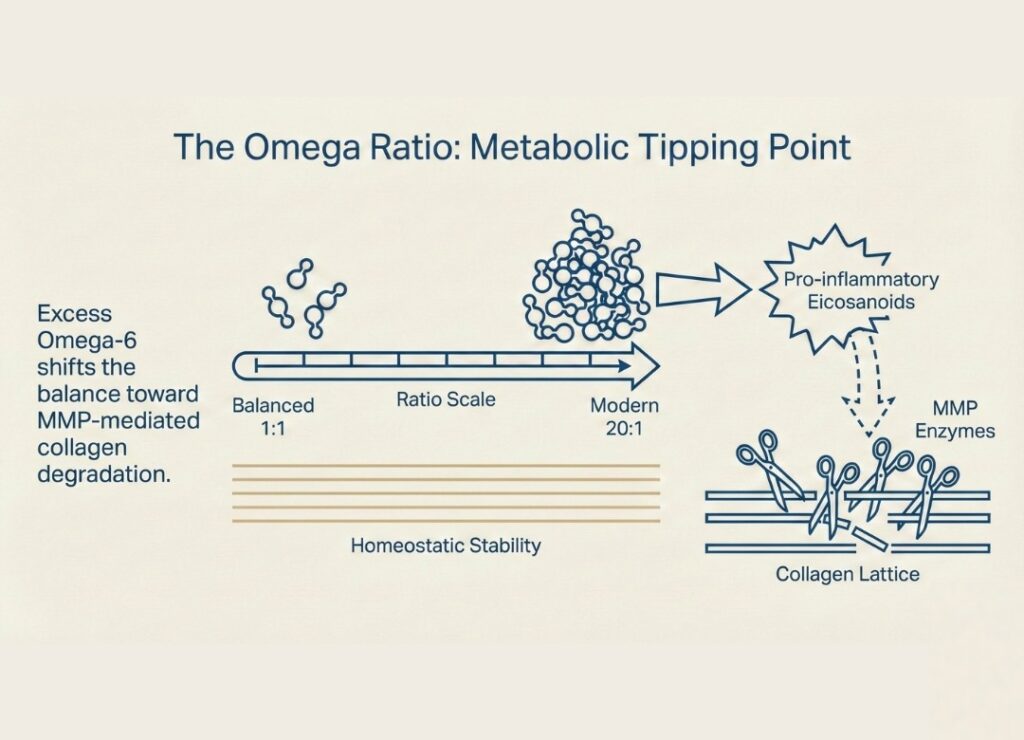
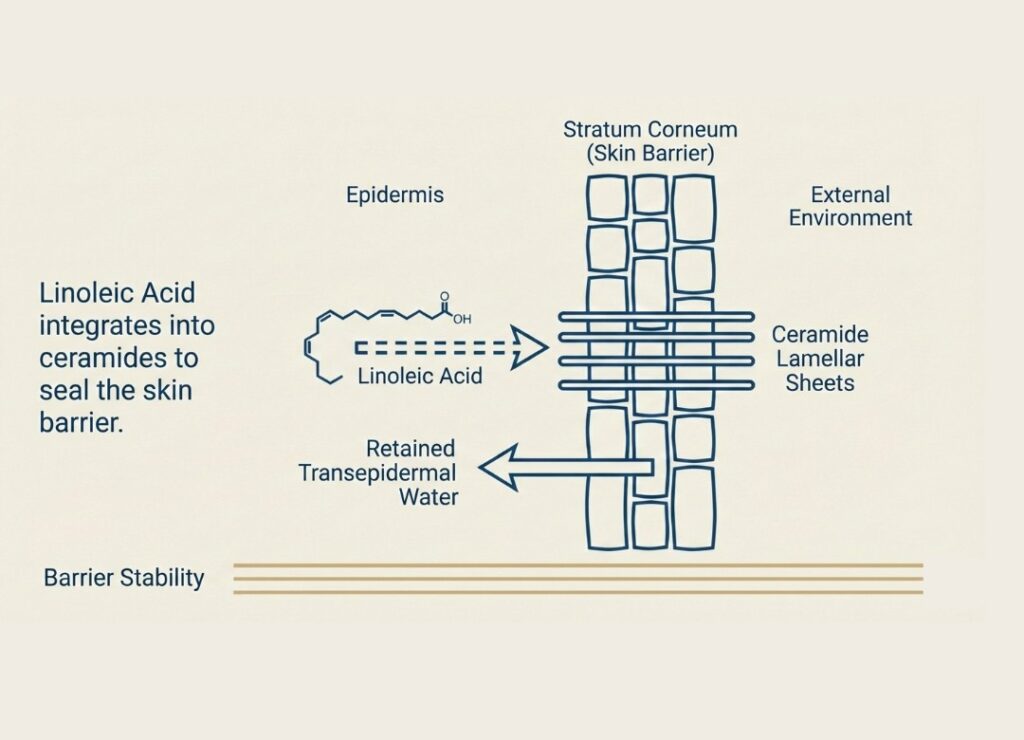
In skin, this translates into more robust barrier function, better hydration, and protection of collagen against enzymatic degradation [Balic et al., 2020]. In the brain, DHA is concentrated in neuronal cell membranes and influences signalling integrity [Swanson et al., 2012; Borsini et al., 2021]. - Omega-6: The Balanced Builder Omega-6 fats like linoleic acid are essential for structural lipids in the skin—especially ceramides that form the barrier and reduce water loss. But in modern Western diets, omega-6 often dominates, skewing the ratio toward pro-inflammatory eicosanoid pathways, hormone-like signals made from fats that act as switches for inflammation [Balic et al., 2020; Djuricic et al., 2021].
In balance, they help the body heal; in excess, they keep tissues in a constant state of alarm. The result is more cellular stress, faster collagen breakdown, and the slow burn of chronic inflammation. - Omega-9: The Conditional Contributor Omega-9 monounsaturated fats, such as oleic acid, are not strictly essential (our bodies can synthesise them). However, they support lipid metabolism, insulin sensitivity, and cardiovascular balance when part of a well-rounded fat profile [Swanson et al., 2012]. In diets rich in monounsaturated fats, oleic acid is associated with longevity and metabolic resilience.
The Crucial Balance: Why Ratios Matter for Cellular Harmony
In nutrition, it is not just the presence of a nutrient that matters, but its proportion. Nowhere is this clearer than with omega-3 and omega-6 fats. Both are essential, both indispensable to life—but when one drowns out the other, the entire system falls into discord.
Traditional human diets are estimated to have held omega-6 : omega-3 ratios in the range of about 1:1 to 4:1 [Simopoulos, 2006; DiNicolantonio et al., 2021]. In contrast, modern Western diets push this ratio as high as 20:1 in favour of omega-6 (DiNicolantonio et al., 2021). Such disproportionate ratios shift the balance toward pro-inflammatory eicosanoid (short-lived signaling molecules) production, which fuels cellular stress, accelerates collagen degradation, primarily by promoting chronic, low-grade inflammation and increasing oxidative stress, which leads to the up-regulation of enzymes that break down collagen. [Simopoulos, 2006; DiNicolantonio et al., 2021].The primary enzymes triggered by this process are Matrix Metalloproteinases (MMPs), you can read more about MMPs and their role in collagen degradation in (Understanding UV, Collagen Breakdown & MMPs)
Restoring harmony does not mean eliminating omega-6 fats—which are necessary for ceramides and skin barrier lipids [Simard et al., 2022]—but rather rebalancing the scale so that omega-3 pathways can properly resolve inflammation rather than being overwhelmed. In skin tissues, this balanced state helps maintain hydration, preserve collagen integrity, and suppress enzymatic breakdown. In brain and cardiovascular tissues, it supports clearer signalling, resilience against oxidative stress, and metabolic homeostasis [Djuricic et al., 2021].
Sourcing Your Omegas—From Traditional to Trailblazing
Getting enough of the right fats is only half the equation; sourcing them is the other. Flaxseed, chia seeds, and walnuts provide alpha-linolenic acid (ALA), but here lies a critical nuance: less than 5–10% of ALA converts to EPA, and only 1–5% converts to DHA in humans [Brenna et al., 2009]. That inefficiency means plant-based ALA alone cannot deliver the broad health benefits consistently observed in clinical trials for long-chain omega-3s.
Fatty fish such as salmon, mackerel, and sardines remain reliable marine sources of long-chain omega-3s, yet they come with their own limitations: variability in EPA and DHA content, risk of environmental contaminants, and the pressing sustainability issue of overfished waters . Consuming fish provides direct access to EPA and DHA, but carries potential risks from mercury and other toxins.
This is where algae step forward. Unlike plants that offer only precursors, microalgae produce EPA and DHA directly. Algal oils deliver these active forms without relying on the body’s poor conversion machinery, while also avoiding heavy metals and offering far greater sustainability. In short: algae provide the benefits of fish oil without the fish [Ryan et al., 2015]
Spirulina: An Algal Case Study in Bioactivity
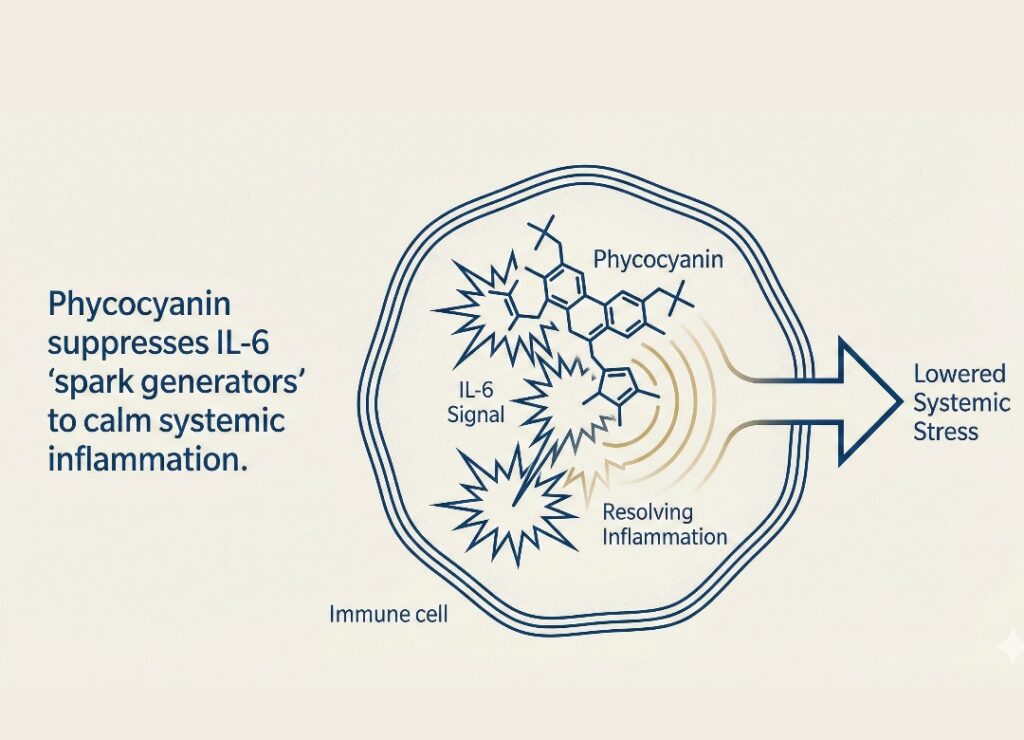
Spirulina (Arthrospira platensis), a blue-green algae, shows how algae can go even further. Beyond omega fatty acids, it carries pigments, proteins, and bioactive peptides that influence metabolism and inflammation. Its most distinctive pigment, phycocyanin, acts like a dimmer switch on the body’s “spark generators.” Phycocyanin lowers oxidative stress and calming inflammatory signals such as IL-6 (interleukin-6) [Liu et al., 2022]. IL-6 is a chemical signal released by immune cells: in small bursts, it helps fight infection and repair tissue, but when levels stay chronically high, IL-6 fuels systemic inflammation.
The practical outcomes are clear in human trials. Across randomised studies, Spirulina supplementation in the range of 1–8 grams per day for 8–12 weeks consistently lowers triglycerides and LDL cholesterol while raising HDL cholesterol, particularly in people with obesity, diabetes, or hypertension [Ramamoorthy & Premakumari, 1996; Zeinalian et al., 2017]
- LDL cholesterol is often called the “bad cholesterol.”
- HDL cholesterol is the “good cholesterol.”
This improvement in lipid balance protects the heart and blood vessels. Several trials also show improvements in fasting glucose and insulin sensitivity (Lee et al., 2008; Szulinska et al., 2017; Karizi et al., 2023).
You may have already seen Spirulina in wellness cafes—a blue swirl in smoothies or “superfood” drinks. But those amounts are decorative, not therapeutic. Clinical benefits only appear at gram-level doses, not the milligrams sprinkled into a latte.
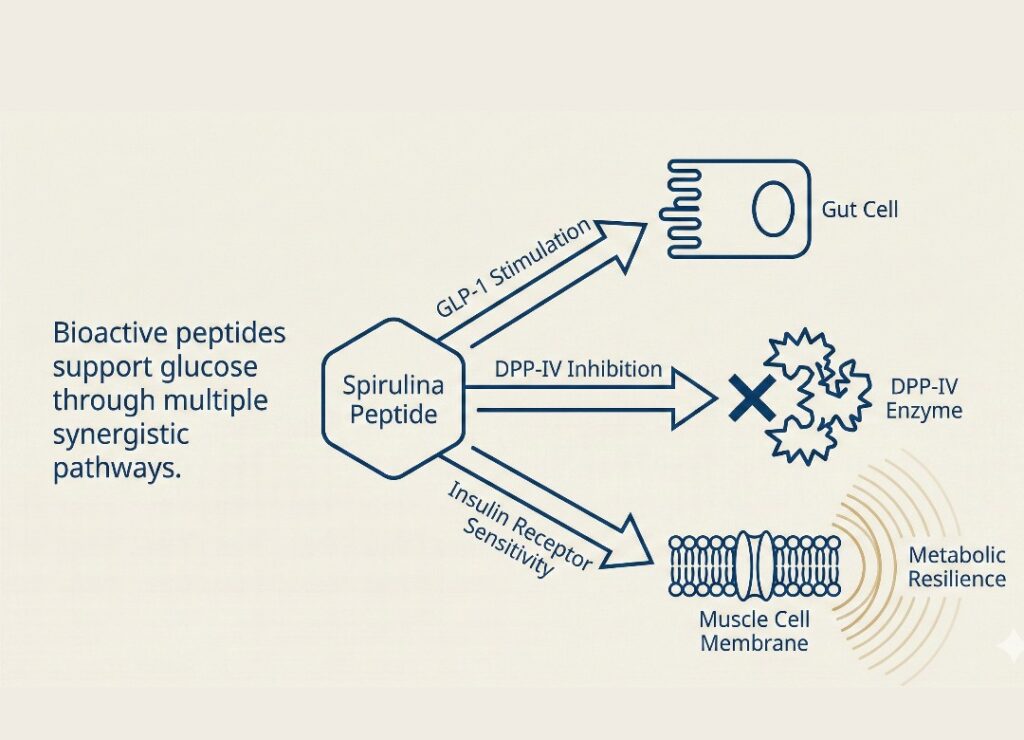
Beyond fatty acids, Spirulina’s proteins can be broken down into bioactive peptides—fragments that act as cellular messengers, influencing satiety, insulin sensitivity, and antioxidant defences [Beihaghi et al., 2017]. Early to mid-stage mechanistic research suggests these fragments may act as natural DPP-IV inhibitors. Think of DPP-IV (dipeptidyl peptidase-4) as a metabolic “off-switch”; its job is to quickly break down GLP-1, the hormone that signals your brain to feel full and your pancreas to manage blood sugar. By gently slowing this enzymatic cleanup, Spirulina peptides may help prolong the life of your body’s own satiety signals. While human trials already confirm Spirulina’s ability to improve fasting glucose and insulin sensitivity, large-scale clinical confirmation of this specific GLP-1 “protection” pathway in humans is still an evolving frontier.
We explore this peptide dimension more fully in (Bioactive Peptides and Healthy Ageing: How Protein Fragments Shape Skin, Muscle, and Metabolism)
Skin & Cellular Ageing: The Omega Connection
Ageing is not written only in genes—it is also etched into membranes, where fats govern how cells respond to stress. In the skin, this plays out visibly. Omega-3s, omega-6s, and their balance determine whether the dermis maintains its scaffolding or surrenders it to inflammation.
- Collagen and photoageing. Ultraviolet light triggers enzymes known as matrix metalloproteinases (MMPs), which unravel collagen fibres. EPA, a long-chain omega-3, dampens this cascade by reducing pro-inflammatory prostaglandins and limiting MMP activation. Clinical studies confirm that supplementation with EPA protects against UV-induced collagen breakdown and reduces markers of photoageing (Rhodes et al., 2003; Pilkington et al., 2013). In metaphor: EPA acts like a shield, not blocking the sun itself, but calming the internal fire it lights in the dermis.
- Barrier integrity and hydration. Linoleic acid, an omega-6, is a core ingredient of ceramides—the lipids that lock water into the skin barrier. The balance matters more than the absolute dose: think of it as mortar and stone. Too little mortar, the wall crumbles; too much, and it becomes brittle.
- Inflammation resolution. Omega-3-derived mediators—resolvins and protectins—are not passive nutrients but active “peacekeepers.” They help cells stand down after an inflammatory insult, preventing the smouldering, low-grade inflammation that accelerates cellular ageing system-wide [Serhan, 2007]. This resolution phase is increasingly recognised as central to healthy ageing, including in skin.
The Cellular Symphony: Nurturing the Omega Balance
Omega-3, omega-6, and omega-9 are not interchangeable nutrients but complementary signals that determine whether inflammation resolves, collagen is preserved, and the skin barrier stays intact. Algae supply these fats in their active forms.
Spirulina extends this benefit by lowering IL-6, improving lipid profiles, and delivering peptides that influence insulin sensitivity and antioxidant defences. For skin, this matters because oxidative stress and low-grade inflammation are central accelerants of collagen loss and barrier decline. Spirulina therefore offers a double contribution—supplying fatty acids while also calming the inflammatory sparks that wear down cellular resilience.
The evidence is consistent: when these signals are balanced, the processes that drive biological ageing slow in ways that are measurable—stronger collagen, calmer inflammation, healthier lipid metabolism, and improved resilience across tissues.