


You follow a meticulous skincare routine. You choose your topical products with care. Yet, you still struggle with persistent irritation, flare-ups, or a lack of vitality. If this sounds familiar, you are not alone.
For too long, the search for healthy skin has focused only on the surface. The true key to lasting resilience lies deeper. The skin is composed of multiple layers, each with specific functions—protecting against environmental damage, retaining moisture, and supporting overall skin health. The outermost layer, known as the skin barrier, acts as the first line of defense.
Modern science is now confirming what ancient traditions intuited: the gut–skin axis. This bi-directional conversation between your digestive system and your skin helps determine how calm, elastic, and structurally sound your skin remains throughout life.
What is the Gut-Skin Axis?
So, what exactly is the gut-skin axis?
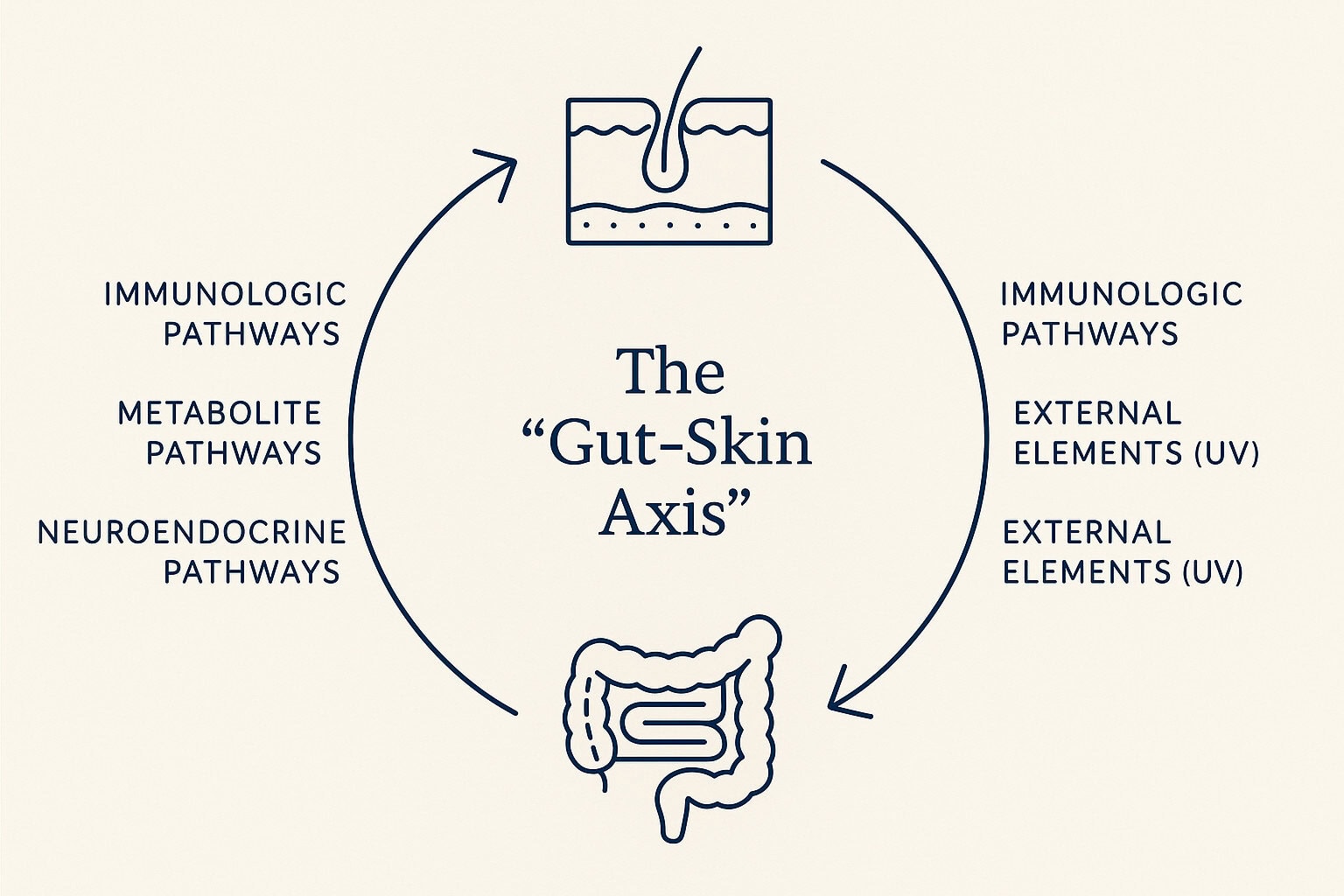
The gut–skin axis is the continuous dialogue between your gut microbiome and your skin. The gut is home to trillions of microorganisms — bacteria, fungi, and viruses — that influence digestion, immunity, and inflammation control. These microbes reside throughout the gastrointestinal tract, where they interact with the body’s systems.
When the microbiome is diverse and balanced, good bacteria help maintain immune balance and barrier integrity across the body — including in the skin. When disrupted, it can send inflammatory signals that show up as breakouts, dryness, or accelerated signs of aging.[Gao et al., 2023].
Maintaining a diverse and balanced gut microbiome is the essence of good gut health. When this internal environment is thriving, it sends signals that help keep your skin healthy.
Gut Dysbiosis and Skin Inflammation
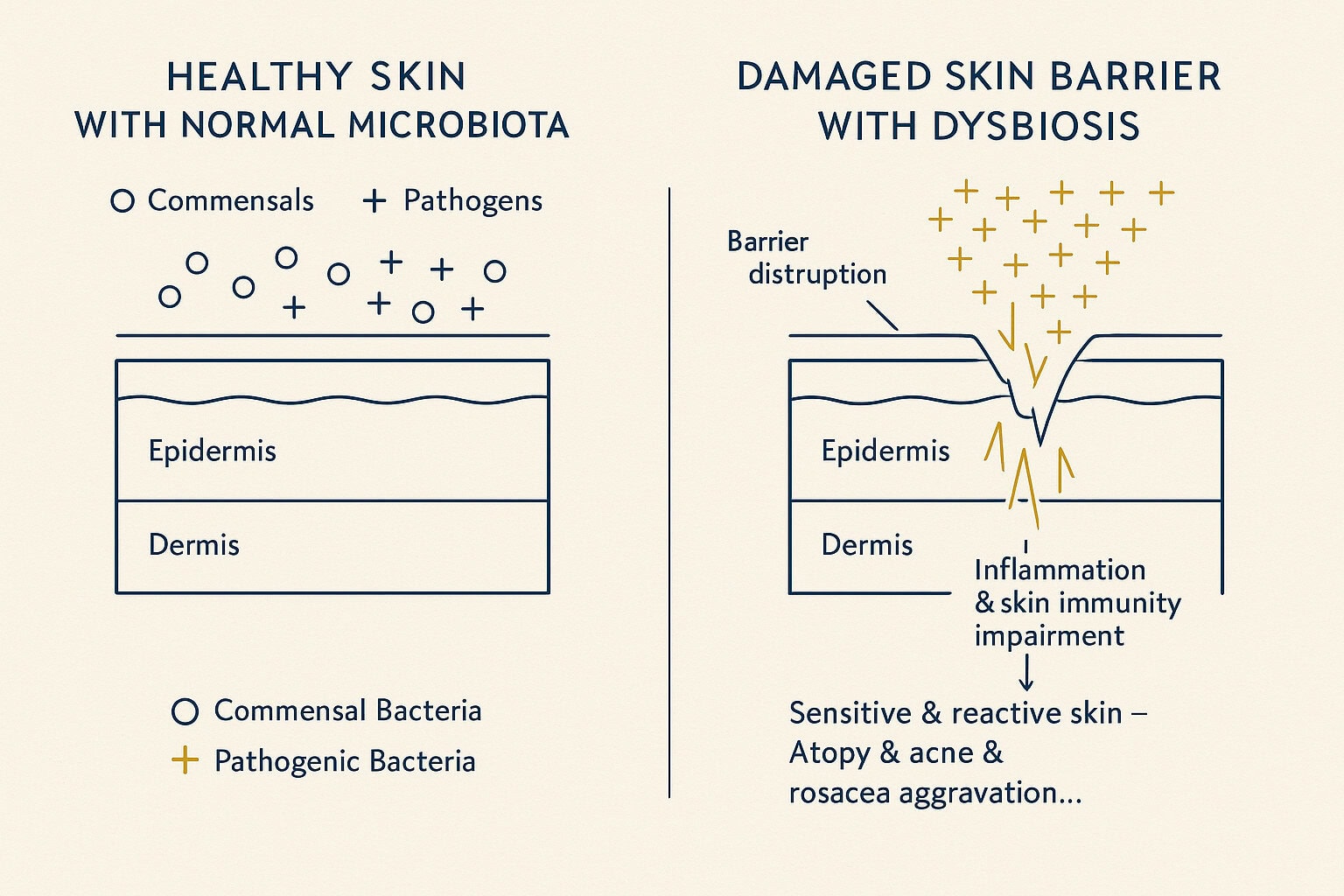
When the delicate balance of the gut microbiome is disturbed — a state called dysbiosis — it can compromise the intestinal lining. This sometimes increases permeability (“leaky gut”), allowing irritants and toxins into the bloodstream. The resulting immune response drives systemic inflammation, which often shows up in the skin. Common symptoms that may indicate underlying gut issues include redness, itching, or flaking. [Gao et al., 2023]
This inflammation is a central feature of conditions like acne, eczema, psoriasis, and rosacea, as well as other skin conditions that may be influenced by gut health. Research also suggests altered gut bacterial composition, such as shifts in Firmicutes and Bacteroidetes, may contribute to acne severity. Inflammation from gut dysbiosis can lead to the development or worsening of skin disease.[Bowe & Logan, 2011]
Is Your Collagen Under Silent Stress?
Answer a few focused questions to uncover whether redox load or repair signalling may be influencing your skin’s resilience.
Collagen Breakdown & Inflammaging
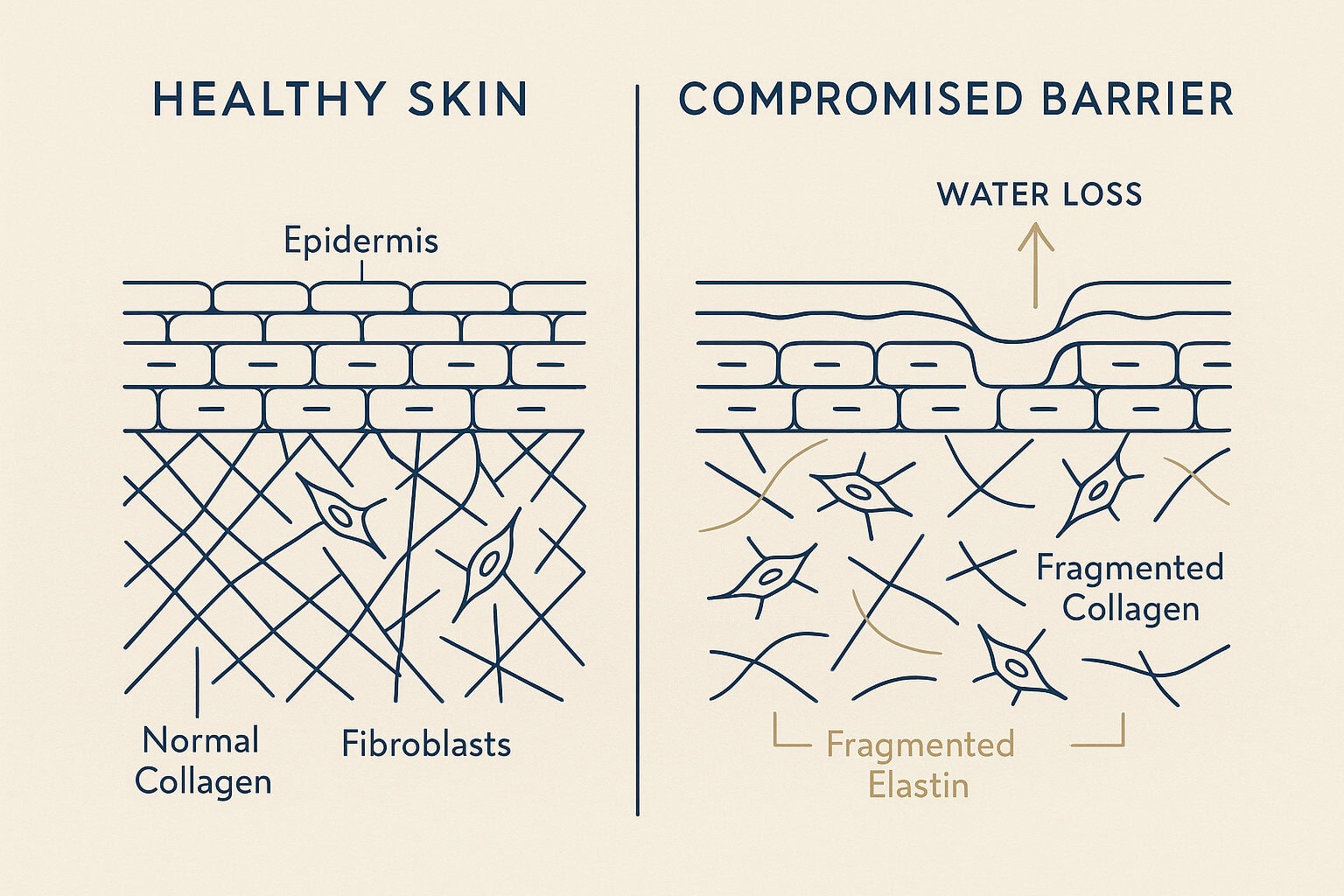
Chronic, low-grade inflammation — sometimes called inflammaging — accelerates visible aging. In the skin, this often takes the form of increased collagen breakdown. Collagen is the most abundant protein in the body, providing structure and strength to connective tissues such as skin, bones, and tendons. (Does The Sun Break Down Collagen? Understandin:g UV, Collagen Breakdown & MMPs)
One key pathway involves enzymes called matrix metalloproteinases (MMPs), particularly MMP-1, which degrade collagen fibers. These enzymes break down the protein structure of collagen fibers, weakening the skin’s support. Elevated MMP activity is linked to wrinkles, sagging, and loss of elasticity. Dysbiosis-driven inflammation can worsen this process. As we age, the body naturally produces less collagen, which contributes to visible signs of aging.
By contrast, a balanced microbiome produces short-chain fatty acids (SCFAs), such as butyrate, that calm inflammation, protect the gut lining, and indirectly preserve collagen integrity. Nutrients like vitamin C and amino acids are essential for collagen production, and consuming foods rich in these nutrients supports the body’s ability to synthesize strong collagen proteins.
Chronic inflammation can damage connective tissue and impair the body’s natural repair processes.. [Gao et al., 2023].
The Crucial Link: Gut Health, Skin Barrier, and Radiance
While dysbiosis highlights the problems, a balanced gut offers profound benefits for your skin’s health, barrier function, and overall radiance. Improved gut health can enhance blood flow to the skin, supporting its health and appearance. Here’s how gut health and skin vitality are positively linked, including the importance of protecting the skin barrier from environmental damage.
Stronger Skin Barrier Function
Strengthened Skin Barrier: A healthy gut microbiome helps regulate your immune system and keep inflammation in check. This internal calm supports the integrity of your skin barrier – your first line of defence against environmental aggressors like pollution and microbes. The skin is composed of multiple layers, with the outermost layer known as the stratum corneum acting as the primary barrier. The stratum corneum, made up of corneocytes and lipids, is essential for maintaining hydration and protecting against environmental damage. If the skin barrier is compromised, it can lead to adverse effects such as increased sensitivity, dryness, and susceptibility to irritants. A strong barrier is better at retaining moisture and resisting irritation, contributing to smoother, more resilient skin. [Gao et al., 2023]
Nutrient Absorption for Radiance
Enhanced Nutrient Absorption: Your gut is where essential nutrients for skin health are absorbed. Vitamins A, C, and E, omega fatty acids, and antioxidants are crucial for skin repair, protection against oxidative stress, and maintaining elasticity. The best foods for gut health can vary from person to person, so tailoring your diet to your individual needs helps optimize both gut and skin health. A well-functioning gut ensures your body – and therefore your skin – receives these vital building blocks for radiance. [Sala et al., 2020]
A thriving gut supports nutrient absorption (e.g., vitamin C, omega-3s) that promote skin repair and collagen.
Probiotics & Prebiotics: Microbiome Allies for Skin Health
Probiotics: Introducing Beneficial Bacteria
Probiotics are live microorganisms that, in adequate amounts, support gut balance. Specific strains such as Lactobacillus casei and Bifidobacterium species have been studied for their ability to regulate inflammation and may reduce the severity of acne, eczema, or dry skin by supporting immune balance and barrier strength.
The best foods for gut health vary for each individual, but incorporating a variety of probiotic-rich foods—such as fermented food options—can help support a healthy microbiome.
However, not all probiotics are equal. Strain specificity and dosage matter, and bioavailability of supplements can vary. While supplementation can be beneficial, food sources of probiotics are an important foundation for gut and skin health. Clinical evidence remains stronger for oral supplementation than for topical use, but particular strains ability to survive is a strong barrier, read how to select you probiotic supplements in (Are Probiotics Supplements Healthy? The Science of Postbiotics, Spore Probiotics, and Prebiotics for Optimal Gut Health).
Prebiotics: Fuel for the Microbiome
Prebiotics are non-digestible fibers that nourish beneficial bacteria. Foods rich in prebiotics — garlic, onions, bananas, leeks, asparagus, whole grains — help maintain microbial diversity and resilience. Including these foods as part of a healthy diet is essential for maintaining a balanced gut microbiome and supporting skin health. When combined with probiotics, they create a synbiotic effect, supporting both gut and skin vitality.
Probiotic strains like *Lactobacillus casei* help balance the microbiome and calm skin.
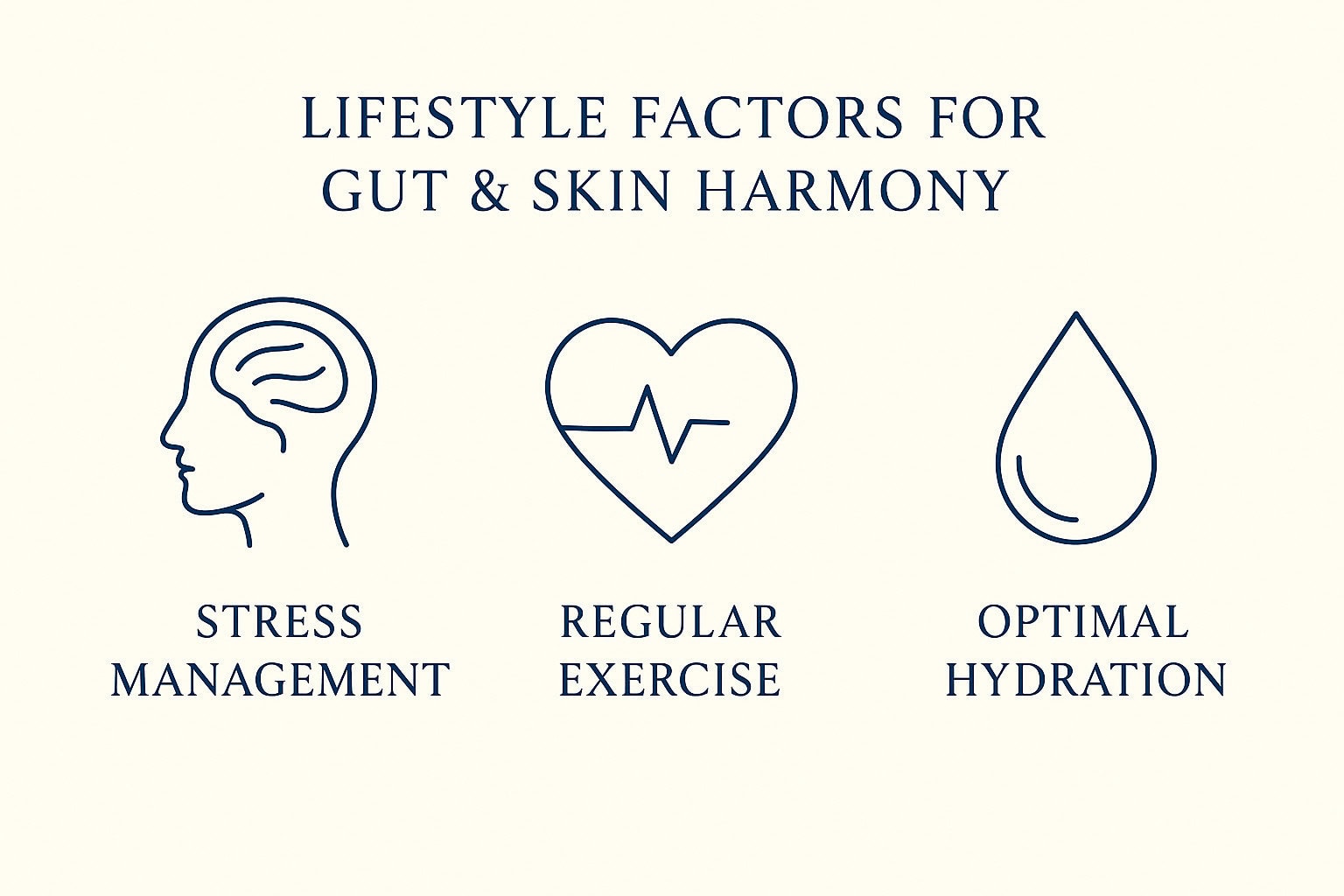
Beyond Diet: Lifestyle Factors for Gut and Skin Harmony
Nurturing your gut-skin axis isn’t just about what you eat; your lifestyle plays a significant role too. Here are few habits that can significantly boost your overall skin health and radiance.
Stress Management
Chronic stress disrupts the gut microbiome and fuels inflammatory skin conditions (Bowe & Logan, 2011). [Bowe & Logan, 2011]. Practices such as meditation, mindful breathing, or yoga can help restore calm internally and externally. Apps like Plum Village can be helpful.
Regular Exercise
Regular movement increases microbiome diversity and reduces systemic inflammation, contributing to skin vitality.
Hydration
Water supports digestion, nutrient transport, and barrier integrity. Adequate hydration is as crucial for the gut lining as it is for the skin’s stratum corneum.
Topical Skincare: Complementary, Not Primary
Topical products can reinforce skin defenses but cannot substitute for internal balance. Ingredients like ceramides, hyaluronic acid, and antioxidants help maintain barrier strength and hydration. Still, without gut equilibrium, their effects are limited.
True skin resilience is built from within, with topical care serving as a supportive layer.
Gut–Skin Axis: Key Takeaways for Radiant Skin
Your Gut Talks to Your Skin
A healthy gut microbiome regulates inflammation and immunity — major factors in common skin conditions like acne, eczema, and dullness.Dysbiosis = Inflammation
Poor diet, stress, or antibiotics can cause gut imbalance (‘dysbiosis’), leading to systemic inflammation that shows up on your skin.Probiotics + Prebiotics = Radiance
Specific strains like Lactobacillus casei and prebiotics from foods like garlic or bananas nourish your gut and help reduce skin flare-ups.Inside-Out Support > Topicals Alone
Lasting skin glow isn’t just about serums — it’s built from within. Gut diversity boosts collagen resilience, hydration, and barrier strength.
Viewing your gut health not just as essential for digestion, but as a cornerstone of your skincare approach, empowers you to cultivate radiance that truly shines from within.
Be first to try our evidence-built formulations.
Collagen Cofactor Complex + Cellular Triad Glutathione Complex.
No noise. No guesswork. Just biologically honest design.
FAQs
This varies greatly depending on the individual, the specific skin concerns, and the consistency of dietary and lifestyle changes. Some people notice improvements within a few weeks, while for others it might take several months of sustained effort. Patience and consistency are key.
Fermented foods like yogurt, kefir, kimchi, and sauerkraut are excellent natural sources of probiotics and can be very beneficial. Whether a supplement is needed depends on your individual diet, health status, and goals. Starting with incorporating diverse fermented foods is a great approach. If considering supplements, look for high-quality products with clinically researched strains. Most probiotics do not survive digestion, so doing your research is key.
There isn’t one single magic bullet, as a holistic approach works best. However, consistently reducing intake of highly processed foods and sugars while increasing fibre-rich whole foods (which feed beneficial bacteria) and effectively managing chronic stress are often two of the most impactful areas to focus on for improving both gut health and skin appearance.
While some topical products containing probiotic extracts or ferments show promise for supporting the skin surface microbiome, their efficacy can vary, and research is ongoing. Addressing gut health internally tackles a root cause of inflammation that topicals alone cannot reach. A holistic approach, combining internal gut support with appropriate skincare, is often most effective.