


In the pursuit of long-term vitality, we often focus on the building blocks of health. But what if the true key lies not just in the materials, but in the messengers? In the sophisticated language our cells use to communicate.
Aging skin is a common concern that drives many people to seek out bioactive peptides and collagen supplements, as these compounds are believed to support collagen production and help combat visible signs of aging.
This is the world of bioactive peptides: small, intelligent molecules that act as precise signals, instructing our body to repair, protect, and thrive. This article unveils the science behind these crucial messengers, explaining how they are the foundation of an effective collagen supplement and a cornerstone of our Nurture Aging™ philosophy.

What Are Bioactive Peptides and How Do They Work?
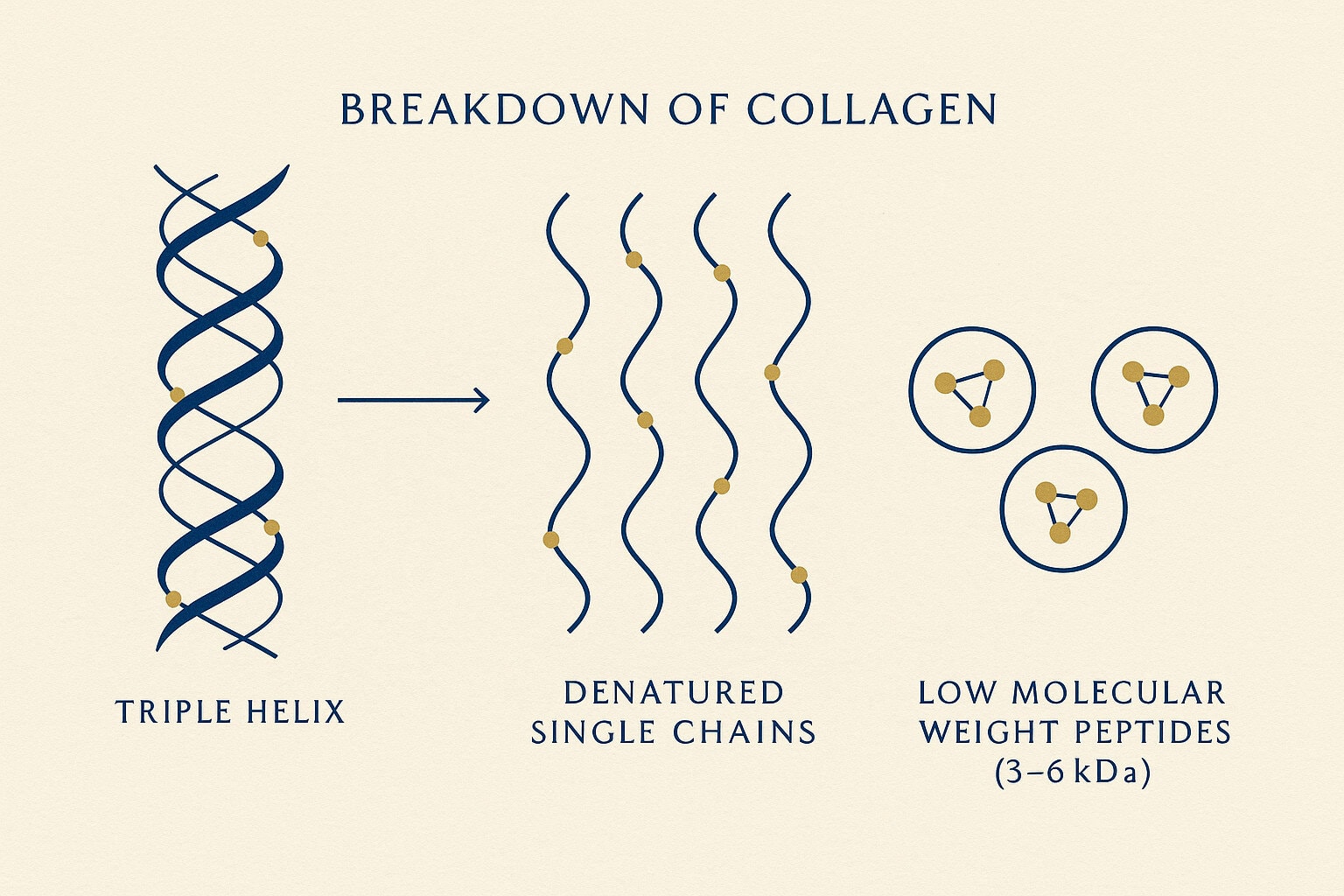
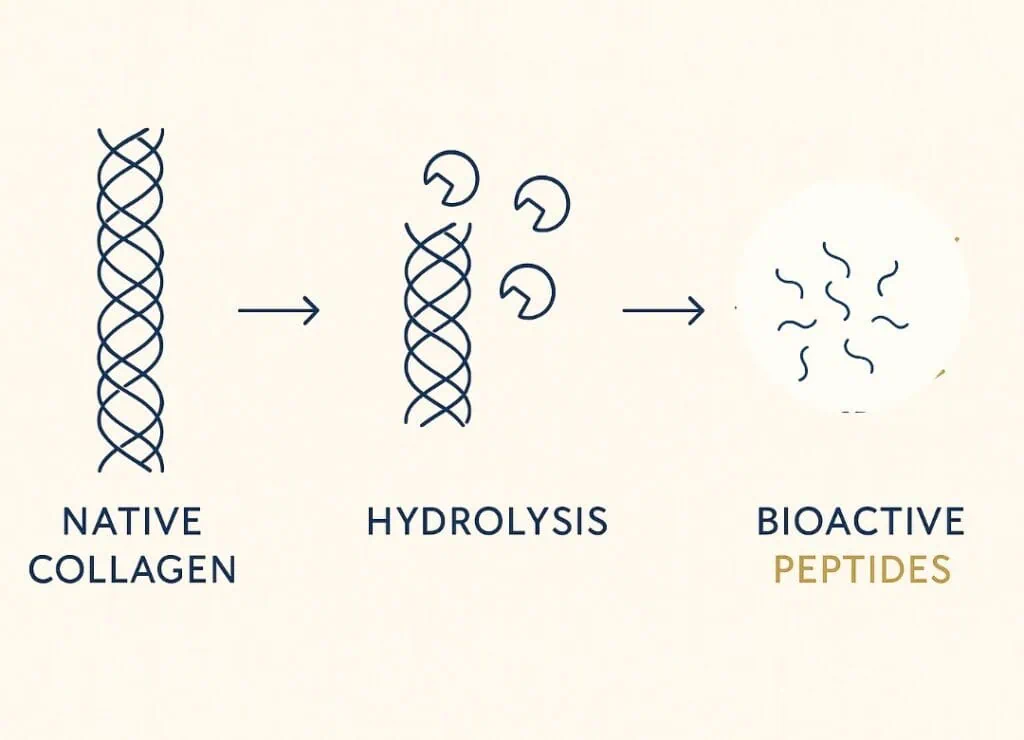
Bioactive peptides are short chains comprising specific sequences of amino acids, released when larger proteins, such as collagen proteins, are broken down, typically through enzymatic hydrolysis. Unlike the larger protein molecules they originate from, these peptides possess specific biological activities once absorbed by the body. After enzymatic hydrolysis, the body breaks down collagen-rich foods into amino acids, which are then used for collagen production. Many bioactive peptides are derived from food proteins such as eggs, meat, and dairy. The digestive system plays a crucial role in breaking down these proteins from food into peptides and amino acids for absorption.
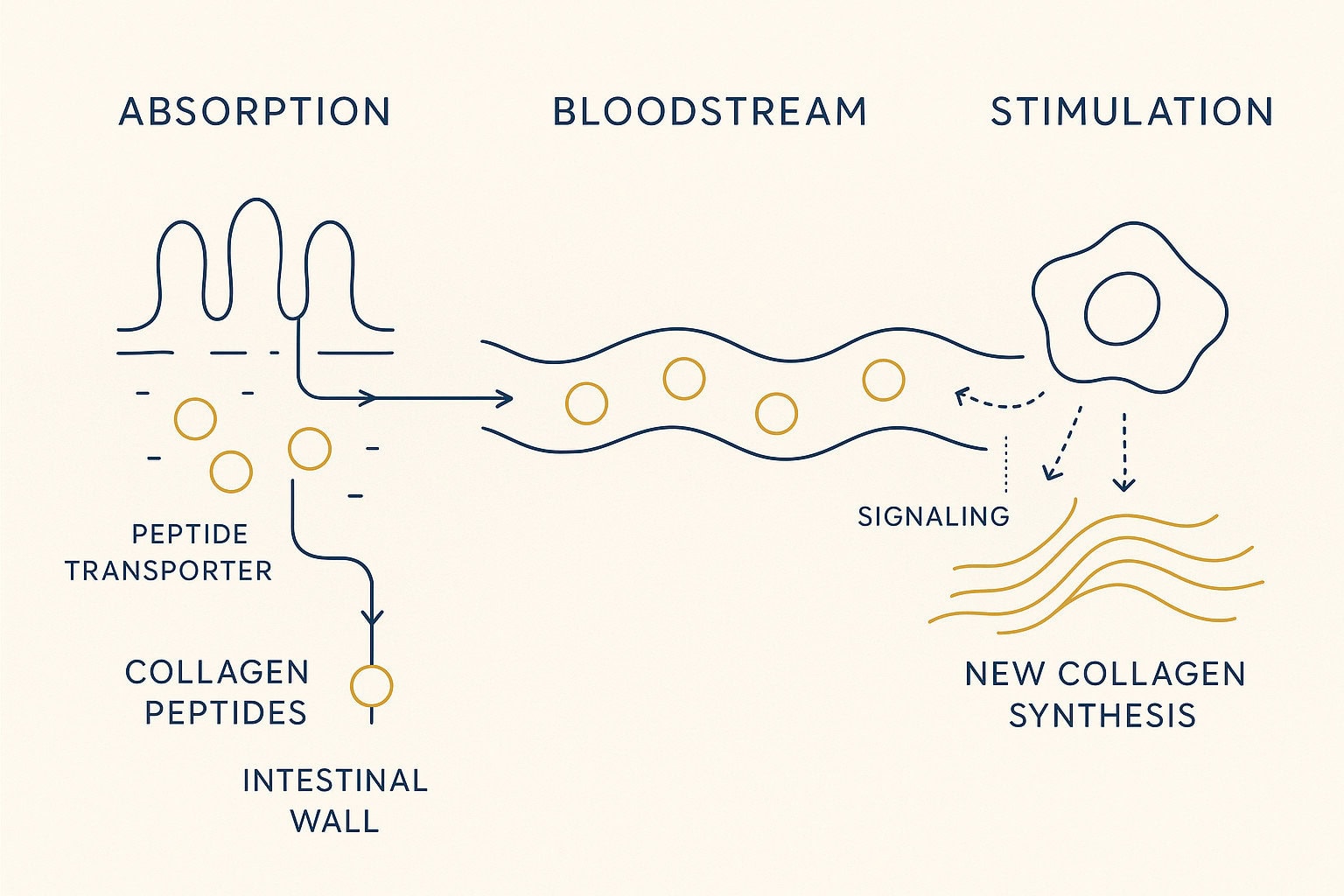
In the context of collagen, these peptides act as signalling molecules. They stimulate fibroblasts – the skin’s specialised cells responsible for collagen synthesis – encouraging them to increase the production of new collagen and other vital components of the extracellular matrix (like elastin and hyaluronic acid). This cellular stimulation supports the body’s natural processes and influences the body’s structures and functions, contributing to improved skin firmness, hydration, and elasticity.
Sources and Extraction: The Science of Hydrolysed Collagen
Bioactive peptides are found in various protein sources, including dairy, fish, and meat, as well as other animal sources such as marine organisms. Many foods, including both plant and animal sources, provide proteins that can be hydrolyzed to yield bioactive peptides. In hydrolysed collagen supplements, an enzymatic process during production breaks down Type I and Type III collagen into low-molecular-weight peptides. Generally ranging from 0.3 to 6 kDa, with most bioactive peptides falling between 0.4 and 2 kDa, which can improve their bioavailability and absorption. While the hydrolysis method influences the composition of peptides, molecular weight ultimately determines their bioactivity and absorption. You can read more about the hydrolysis process in (Do Collagen Supplements Work?)
Understanding the Types of Collagen
Collagen is the most abundant protein in the human body, accounting for nearly a third of our total protein content. It serves as the primary structural component in many tissues, providing strength, flexibility, and support. Scientists have identified at least 28 types of collagen, but five main types play the most significant roles in our health.
- Type I collagen is the most prevalent, found in skin, bones, tendons, and connective tissues, and is crucial for maintaining skin health and resilience.
- Type II collagen is primarily located in cartilage, making it essential for joint health and the smooth functioning of our joints.
- Type III collagen supports muscles, organs, and blood vessels, contributing to the structure and elasticity of these tissues.
- Type IV and V collagens are found in cell membranes and hair, respectively, playing specialized roles in tissue structure.
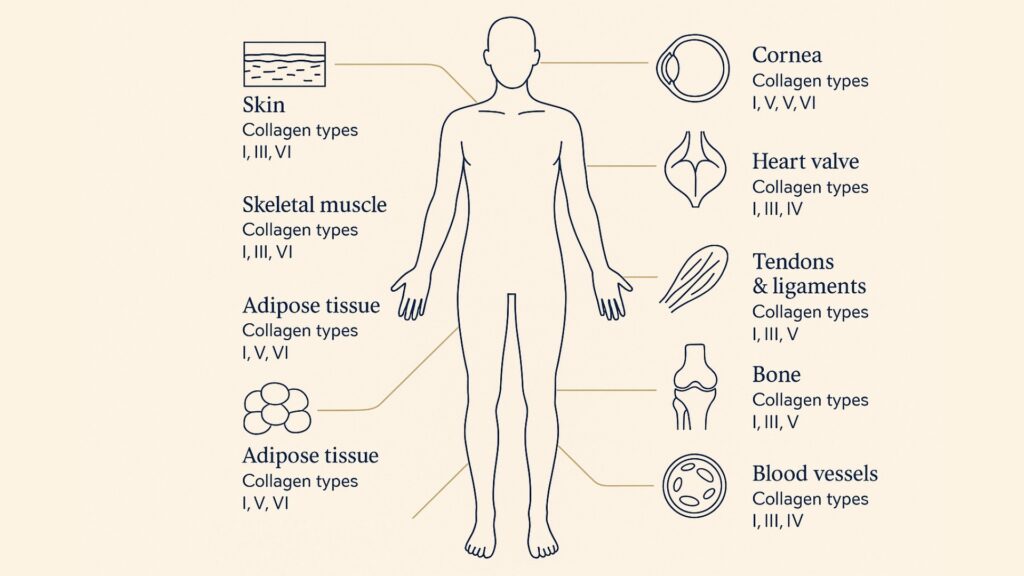
Understanding these types is important when considering collagen supplementation. Many collagen supplements contain a blend of Type I and Type III, targeting skin, hair, and connective tissue support, while others may focus on Type II for joint pain relief. Specific bioactive collagen peptides derived from these types have been shown in studies to support skin health, reduce joint pain, and promote overall well-being. When choosing a collagen supplement, checking which types of collagen it contains, as well as other quality checks we will cover in the journal can help you match the product to your health goals.
The Evidence: The Multifaceted Benefits of Bioactive Peptides
Numerous studies highlight the benefits of collagen peptides, emphasizing their potential benefits for human health by supporting various physiological functions such as skin vitality, joint support, and bone health, with research supporting collagen’s role as a key structural protein and its positive impact on aging-related decline.
Stimulating Collagen Production for Radiant Skin
Fibroblasts are specialised skin cells responsible for producing collagen and the extracellular matrix (ECM) – the skin’s structural support network. Research has shown that Prolyl-hydroxyproline (Pro-Hyp), a key collagen peptide found in the bloodstream after consuming hydrolysed collagen, supports the function of adult human dermal fibroblasts and boosts the synthesis of other vital ECM proteins like elastin, contributing to improved skin structure and resilience. [Frontiers in Nutrition]. These effects can help slow skin aging, support skin hydration, and contribute to reducing wrinkles by maintaining skin elasticity and moisture.
Powerful Antioxidant Protection Against Free Radical Damage
Our skin is constantly exposed to factors generating reactive oxygen species (ROS), unstable molecules causing oxidative stress that damages cells and accelerates ageing. Oxidative stress also contributes to less collagen in the skin as we age, leading to reduced skin elasticity and more visible signs of ageing. Certain collagen peptides, particularly those containing the amino acid hydroxyproline, have demonstrated potent antioxidant capabilities. They can effectively neutralise ROS, helping to protect skin cells from damage and reduce overall oxidative stress. This protective action slows down the degradation of existing collagen and supports long-term skin health. The beneficial effect of antioxidant peptides includes maintaining youthful skin and reducing oxidative damage. [Zaky et al., 2022]. You can read more about oxidative stress effect on the skin in (Does The Sun Break Down Collagen? Understandin:g UV, Collagen Breakdown & MMPs)
Reducing Inflammation for Improved Skin Health and Comfort
Chronic inflammation is increasingly recognised as a key driver of skin ageing and breakdown of tissues. Cytokines are signalling proteins that regulate inflammation; Interleukin-6 (IL-6) is a notable pro-inflammatory cytokine. When unregulated, IL-6 contributes to inflammatory processes that degrade the skin matrix. You can learn more about teh role of inflammation in aging in [Rea et al., 2018]. Specific collagen peptides, such as Hydroxyprolyl-Glycine (Hyp-Gly), have been shown to help downregulate IL-6 production.
This reduction in inflammatory signalling supports better skin barrier function and overall skin health, highlighting the important functions of bioactive peptides in modulating inflammation and maintaining healthy skin. [Zaky et al., 2022].
Bioactive Peptides: Beyond Skin Deep – Joint, Bone, and Gut Health
While often discussed for their skin benefits, the positive effects of bioactive collagen peptides may also extend to other areas of health. Clinical studies suggest potential support for joint function, bone density, and even gut barrier integrity. However, the body of research in these domains is still smaller and less conclusive compared to the more established evidence for skin health.
Supporting Joint Comfort and Mobility
Collagen is a primary component of cartilage, the tissue cushioning our joints. Specific collagen peptides, particularly dipeptides like Pro-Hyp, have been shown to reach joint tissues and stimulate chondrocytes (cartilage cells). Collagen peptides may help improve joint function by supporting cartilage integrity and reducing joint pain.
Research indicates these peptides can enhance the synthesis of cartilage matrix components, potentially aiding repair processes and contributing to reduced joint discomfort and improved mobility, especially in individuals experiencing conditions like osteoarthritis. [Ide et al., 2021], [Ichikawa et al., 2010]
Promoting Bone Strength and Density
Collagen forms the flexible protein scaffold within our bones, providing essential structure and resilience alongside minerals. Ingested collagen peptides supply key amino acids like glycine and proline that are fundamental building blocks for this bone matrix. Furthermore, research suggests certain peptides may help stimulate osteoblasts, the specialised cells responsible for bone formation, potentially contributing to maintaining bone strength and density over time.
Maintaining bone strength is also important for supporting muscle mass and overall mobility, particularly as we age.
Additionally, vitamin D plays a crucial role in supporting bone health, particularly in preventing bone loss and improving bone mineral density, especially when combined with collagen supplementation and Vitamin K2.
Nurturing a Healthy Gut Microbiome
Emerging research highlights the role of collagen peptides in supporting gut health. Peptides such as Pro-Hyp and Gly-Pro-Hyp appear to help maintain the integrity of tight junctions between cells in the gut lining. By supporting this intestinal barrier, they may reduce inflammation and permeability (“leaky gut”), promoting gut homeostasis.
Additionally, collagen peptides provide amino acids like glutamine, known to nourish intestinal cells. This contributes to a balanced gut environment, where beneficial bacteria in the gut interact with peptides, influencing gut health and immune function. [Perna et al., 2019]. Further investigation is exploring the potential synergistic benefits of combining collagen peptides with prebiotics for optimal gut health support.
Choosing the Best Collagen Supplement: Understanding Peptide Profiles
Molecular Weight and Bioavailability: Why Size Matters
For collagen peptides to work, they need to be absorbed efficiently into the bloodstream. This is where bioavailability becomes crucial. Research consistently shows that hydrolysed collagen with a low molecular weight profile, ideally below 3kDa (kilodaltons), exhibits superior absorption compared to larger peptides or intact collagen molecules. These smaller peptides can more readily pass through the intestinal barrier and reach target tissues throughout the body. While the hydrolysis method influences the types of peptides present, the molecular weight is a primary determinant of overall bioavailability and subsequent bioactivity
The Role of Enzymatic Hydrolysis
The specific enzymes used during the hydrolysis process significantly influence the final composition and profile of the resulting bioactive peptides. Different enzymes cleave the collagen protein at different points, leading to variations in the types and ratios of peptides generated. Research comparing various hydrolysis methods confirms that enzyme selection is a critical factor affecting the final peptide profile and potentially its specific biological effects.
Bovine vs. Marine Collagen: A Comparison of Peptide Profiles
When selecting collagen, both the source and the manufacturing process matter. Bovine collagen typically provides a blend of Type I & III collagen, offering broad support for skin, joints, and gut health. Marine collagen is primarily Type I.
While you might hear claims about one source having inherently ‘smaller’ or ‘more absorbable’ peptides, optimal absorption actually depends on effective enzymatic hydrolysis creating low molecular weight peptides (<3kDa) – a quality factor achievable in both well-processed bovine and marine collagen. The choice often comes down to the desired collagen types (I & III vs I) and ensuring quality processing.
For a thorough examination of bovine versus marine collagen, including a deeper look at absorption factors and which might suit your specific goals:
➡️ Read our dedicated comparison guide
Key Indicators of a High-Quality Collagen Supplement
Navigating supplement labels can be tricky. Here’s what to prioritise:
- Understanding Terminology: You might see “Bioactive Collagen Peptides® ” on some products. It’s vital to recognise this is often a trademarked brand name, not a unique scientific category. All properly hydrolysed collagen contains bioactive peptides, but the peptides profile may vary.
- Low Molecular Weight: Look for evidence of a low molecular weight profile, ideally specified as 3kDa or lower, for optimal absorption.
- Hydrolysed Type I & III Bovine Collagen: Choosing a supplement containing both major types from a bovine source offers more comprehensive support for skin, joints, bones, and gut health.
- High Concentration & Purity: While specific peptide concentrations are rarely listed, look for products with minimal fillers, unnecessary additives, or bleach.
- Reputable Sourcing & Transparency: Choose brands that are transparent about their sourcing, manufacturing processes, and quality control testing (e.g., third-party certifications). You can learn more about our supplier COLLinstant® and their manufacturing process here.
How to Use Collagen Peptides for Optimal Results
Incorporating collagen peptides into your routine is simple, but consistency and appropriate dosage are key to experiencing the benefits. Here’s what the research suggests regarding intake and the typical timeframe for observing results.
Recommended Daily Intake and Timeframe for Visible Benefits
Clinical studies suggest that daily doses of 2.5–10 g of collagen peptides can support skin health benefits such as improved hydration and elasticity. Higher intakes, around 10–15 g per day, have been investigated for joint health support.
Some research has also explored collagen supplementation for brittle nails and nail growth. While a few small studies suggest improvements in nail brittleness and growth, the overall scientific evidence remains limited and inconclusive. For hair and nail health, ensuring adequate dietary intake of nutrients such as biotin, silicon, and iron is a more established approach.
When using supplements, always consider the bioavailability of the ingredients. For example, silicon is notoriously difficult for the body to absorb. Many products use bamboo-derived silicon, which is poorly bioavailable. In contrast, orthosilicic acid (OSA) is considered the gold standard form of supplemental silicon. Monomethylsilanetriol (MMST) is less researched but has also demonstrated good bioavailability compared with bamboo extracts. [Jurkić et al., 2013], [Sadowska & Świderski 2020]
The effects of collagen peptides and related supplements can vary between different bodies, and individuals with liver problems or any other medical condition should consult a healthcare provider before starting supplementation.
Be first to try our evidence-built formulations.
Collagen Cofactor Complex + Cellular Triad Glutathione Complex.
No noise. No guesswork. Just biologically honest design.
FAQs
Yes, the benefits of bioactive collagen peptides extend beyond the skin. For joints, specific peptides can stimulate cartilage cells (chondrocytes) and support the production of cartilage matrix, potentially aiding in joint comfort and mobility. In bones, they provide essential amino acids for the bone matrix and may stimulate bone-forming cells (osteoblasts). For gut health, certain peptides can help maintain the integrity of the gut lining, potentially reducing inflammation and supporting a healthy gut environment.
Generally, collagen peptide supplements are considered safe for most healthy individuals with few reported side effects. Some people may experience mild digestive issues like bloating, gas, or a feeling of fullness, especially when starting a new supplement. It’s always recommended to start with a lower dose and gradually increase to the recommended amount. If you have any pre-existing health conditions or are taking other medications, it’s best to consult with your healthcare provider before 1 starting any new supplement.
When selecting a collagen supplement, prioritize products that specify a low molecular weight (ideally below 3kDa) for optimal absorption. Look for “hydrolysed collagen,” preferably Type I & III from a bovine source for comprehensive benefits. Choose supplements with minimal fillers or additives and opt for brands that are transparent about their sourcing and manufacturing processes, potentially looking for third-party certifications.
Both bovine (typically Type I & III) and marine (primarily Type I) collagen can be effectively hydrolysed to produce bioactive peptides with good absorption, provided the molecular weight is low (below 3kDa). The main difference lies in the types of collagen they primarily contain. Bovine offers a broader range for skin, joints, and gut, while marine is mainly Type I, which is also beneficial for skin and bones. The quality of the hydrolysis process is more critical for absorption than the source itself.
Molecular weight refers to the size of the collagen peptides, measured in kilodaltons (kDa). Low molecular weight, ideally below 3kDa, signifies that the peptides are small enough to be efficiently absorbed through the intestinal barrier into the bloodstream. Better absorption leads to greater bioavailability, allowing the bioactive peptides to reach their target tissues and exert their beneficial effects more effectively.